Affording a Home in Northern Virginia by 2026
Real Estate, Northern Virginia Home Affordability
How Much House Can I Afford in Northern Virginia in 2026?
If you are thinking about buying a home in Northern Virginia in 2026, the real question is not “What price range can I shop in?” but “What monthly payment can I live with and still sleep at night?” In a market where average prices in Fairfax County hover around $780,000–$930,000 and 30‑year mortgage rates sit in the 6.4%–6.5% range, getting clarity on affordability is essential before you start touring homes.
Start With Your Monthly Payment Comfort Zone
Lenders tend to focus on what you qualify for. The Mike Webb Team focuses on what you can comfortably live with. Those can be two very different numbers. A bank might approve you for a payment that technically fits debt‑to‑income guidelines, but if that payment leaves no room for childcare, commuting, dining out, or travel, it will not feel affordable in real life.
A helpful starting point is to decide the maximum total monthly housing cost you are comfortable with, including:
Principal and interest (your mortgage payment)
Property taxes and homeowner’s insurance (often escrowed)
HOA or condo fees, if applicable
Once that monthly comfort number is clear, we can work backwards with a trusted local lender to figure out an appropriate price range in today’s 6.4%–6.5% interest‑rate environment.
The Five Key Factors That Drive Affordability in 2026
In Northern Virginia’s competitive 2026 market, several factors shape how much house you can afford:
Income: Lenders look at your gross monthly income and typically prefer your total debt payments (including the new mortgage) to stay under about 43%–45% of that number. Higher income can support a larger payment, but only if it fits your lifestyle and goals.
Debt: Student loans, car payments, and credit cards all count. Reducing monthly debt before you buy can significantly increase your comfortable price range without earning a single extra dollar of income.
Down payment: A larger down payment lowers your loan amount and monthly payment and can help you avoid mortgage insurance. Northern Virginia buyers often use a mix of savings, proceeds from a home sale, and sometimes family gifts to reach 5%–20% down, but there are also low‑down‑payment options available.
Credit score: Strong credit can unlock better interest rates and lower mortgage insurance premiums. Even a modest improvement in your score can save you hundreds of dollars per month over the life of the loan.
Interest rates: With 30‑year fixed rates around 6.4%–6.5% in mid‑2026, rate shopping and timing matter. A difference of even 0.25% in rate can shift your affordable purchase price by tens of thousands of dollars.
Real‑World Example: A Northern Virginia Buyer in 2026
Consider a fictional but realistic couple, Alex and Priya, relocating for work in 2026. Together they earn $210,000 per year, have about $1,000 per month in student loans and car payments, and have saved $140,000 for a down payment and closing costs. Initially, they used an online calculator that suggested they could “afford” a $1.3M home, based solely on income and a generic debt ratio.
When they sat down for a personalized affordability review with The Mike Webb Team and a local lender, they realized that at current interest rates, a $1.3M purchase would push their total monthly housing cost well beyond what felt comfortable, especially with daycare and commuting costs. After walking through realistic payment scenarios, they targeted a purchase around $950,000–$1,000,000 instead—still competitive in many Fairfax County neighborhoods, but far more aligned with their real monthly comfort level.
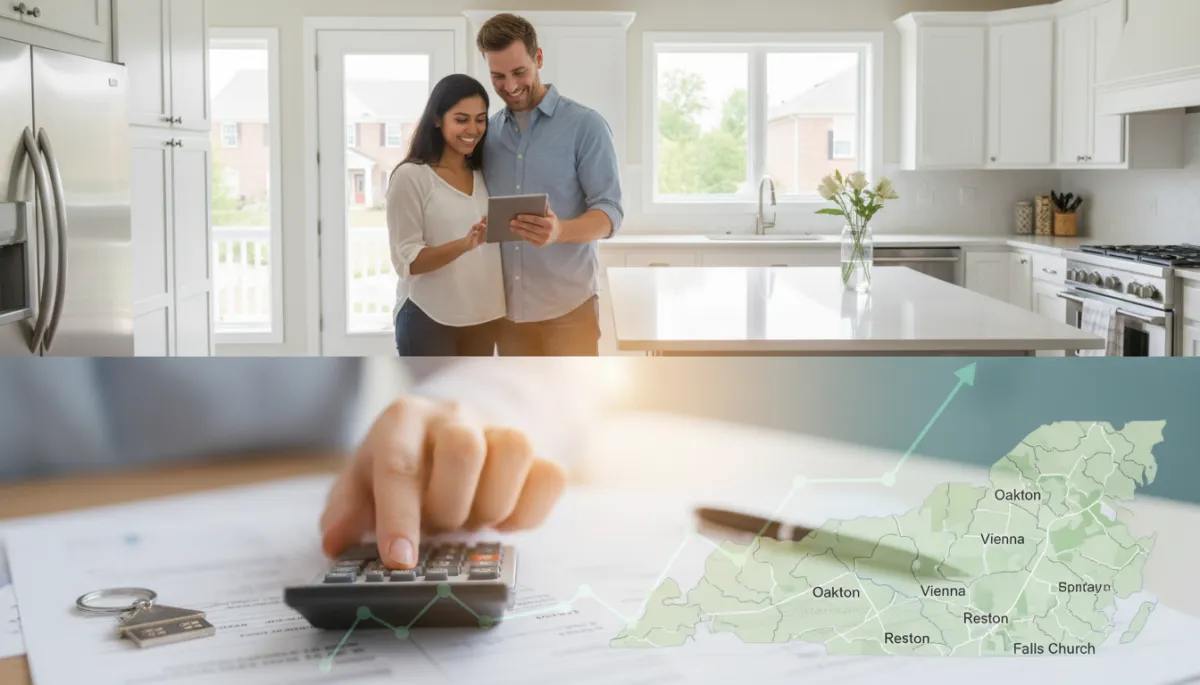
How Prices Vary: Oakton, Vienna, Fairfax, Reston, and Falls Church
In Northern Virginia, affordability is not just about your finances—it is also about where you buy. Recent 2026 data show meaningful price differences across key communities (Zillow, Redfin, Realtor.com, and Fairfax County market reports):
Oakton: Median sale prices often range from the mid $700,000s to above $1.1M, with many larger single‑family homes commanding premium prices.
Vienna: One of the priciest pockets, with recent median sold prices around $1.4M, especially for updated single‑family homes near the town center and Metro access.
Fairfax (County overall): Average prices near $928,000 and median around $780,000, offering a broad mix of condos, townhomes, and detached homes at varying price points.
Reston: Generally more affordable than Vienna or Falls Church, with median prices in the mid‑$600,000s to high‑$600,000s and a good selection of condos and townhomes near the Silver Line.
Falls Church (City): A small, in‑demand city where recent median prices hover around $1.17M, reflecting its walkability and strong schools, even with some year‑over‑year softening.

Side‑by‑side neighborhood data helps align wish lists with realistic price ranges.
Common Affordability Mistakes to Avoid
In our work with Northern Virginia buyers, The Mike Webb Team sees a few patterns that can create stress or disappointment:
Shopping before talking to a lender: Touring $1.2M homes in Vienna before you know whether you are more comfortably in the $800,000s is a recipe for frustration. A 20‑ to 30‑minute conversation with a local lender can save weeks of wasted time and emotional energy.
Relying on generic online calculators: Many calculators underestimate taxes, insurance, HOA fees, or current 6.4%–6.5% mortgage rates. They also cannot account for your specific debts, credit score, or local property tax differences between, for example, Fairfax County and Falls Church City.
Focusing only on the maximum approval: Just because a lender says “yes” to a certain amount does not mean that number supports your long‑term financial and family goals.
Income, Down Payment, and Credit Score: What Do You Really Need?
Every buyer’s situation is unique, but we are frequently asked three core questions:
“What income do I need?” For many Northern Virginia purchases in the $700,000–$900,000 range, it is common to see combined household incomes in the mid‑$100,000s and up. However, a more modest condo in Reston or Fairfax may be attainable with significantly less, especially if you have low debt and a solid down payment.
“How much down payment is required?” While 20% down is ideal to avoid mortgage insurance, many qualified buyers purchase with 3%–10% down. The right amount for you depends on your cash reserves, comfort with monthly payments, and how quickly you want to move.
“What credit score do I need?” Some loan programs allow scores in the 600s, but you will generally see better rates and terms with scores above 700. If your score is close to the next tier, a targeted improvement plan can be worth thousands over time.
💡 Professional Insight: Before you assume you “do not qualify,” have a local lender review your full picture. Many buyers are closer than they think once all factors are considered together.
Why a Personalized Affordability Review Matters
Generic rules of thumb and national headlines cannot tell you how much house you can comfortably afford in Oakton versus Reston, or whether it makes sense to stretch for Falls Church City schools versus choosing a larger home in Fairfax. That is where a personalized affordability review with a local real estate team becomes invaluable.
When you sit down with The Mike Webb Team, we walk through:
Your income, debts, savings, and credit profile in the context of current 2026 interest rates
Realistic monthly payment ranges and how they translate into price ranges in specific neighborhoods and school pyramids
Side‑by‑side comparisons—such as a townhome in Reston versus a smaller single‑family home in Fairfax or a condo closer to Metro in Vienna
The goal is simple: to give you the confidence, clarity, and expert guidance you need to make a decision that supports both your financial future and your family’s day‑to‑day life, without unnecessary stress or surprises.
Moving Forward With Confidence in 2026
In a fast‑moving Northern Virginia market, “How much house can I afford?” is not a one‑size‑fits‑all answer. It is a conversation—about your income, debt, down payment, credit score, and the reality of today’s interest rates, but also about your values, priorities, and tolerance for risk.
If you are considering a move in 2026, a short, focused affordability review with The Mike Webb Team and a trusted local lender can help you define a clear monthly payment comfort zone and translate it into the right neighborhoods and price ranges. That way, when you do step into a home in Oakton, Vienna, Fairfax, Reston, or Falls Church, you will know not only that you love it—but that it truly fits your life and your budget.