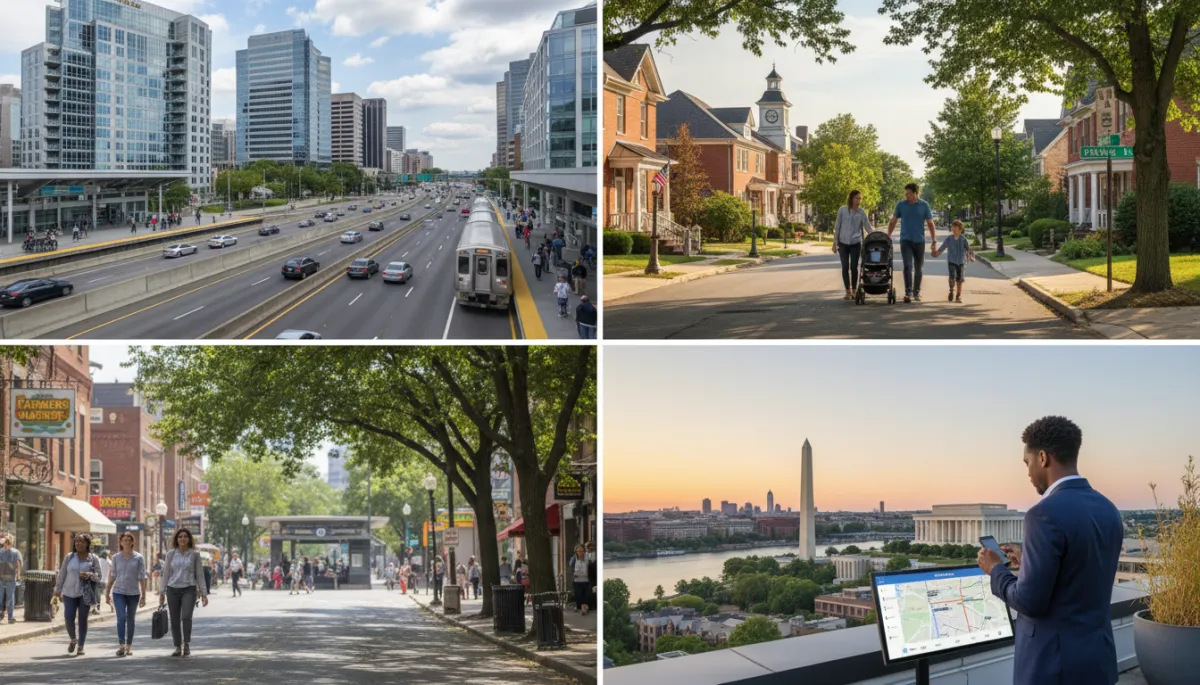
Best Commutes from Tysons, VA to Washington, DC
Real Estate, Northern Virginia Commutes, Washington DC Metro Area
Which Neighborhoods Near Tysons, VA Have the Best Commute to Washington, DC?
If you work in Washington, DC but want the space, schools, and lifestyle of Northern Virginia, the communities surrounding Tysons offer a compelling balance. As experienced local advisors, The Mike Webb Team often helps government employees, families, and hybrid professionals compare neighborhoods like McLean, Vienna, Falls Church, Arlington, Reston, and Merrifield to find the right mix of commute, housing, and community feel.
Key Commute Considerations Near Tysons
For DC-bound buyers, commute is rarely just about minutes on a map. It is about reliability, flexibility, and day‑to‑day quality of life. Around Tysons, several options stand out:
Metro access: The Silver Line connects Tysons directly to downtown DC, with trains every 6–15 minutes during most of the day (dcmetro.info).
Highway connections: I‑495, I‑66, the Dulles Toll Road, and Route 50 offer multiple driving routes, plus express lanes for some segments.
Multimodal options: Metrobus, Fairfax Connector, OurBus to Union Station, VRE via nearby stations, e‑bikes, and rideshare services add backup and flexibility.
💡 Pro Tip from The Mike Webb Team: When we evaluate commute for clients, we look at both a “best case” and a realistic “rainy Tuesday” scenario. That difference often determines which neighborhood truly fits your routine.
McLean: Executive Convenience and Prestige
Commute & transit: McLean sits just east of Tysons and enjoys direct access to the McLean Silver Line station, plus quick connections to I‑495 and the George Washington Parkway. Metro rides to downtown DC typically run about 30–40 minutes, while off‑peak drives into the city can be similarly timed but vary with traffic.
Lifestyle & housing: McLean is one of Northern Virginia’s most premium markets, with 2026 median sale prices around the high six to low seven figures and many homes well above $1.5M. You will find large single‑family homes, estate‑style properties, and high‑end new construction, along with some townhomes and condos closer to Tysons. The community atmosphere is quiet, established, and highly sought after by senior government officials, executives, and families prioritizing schools and privacy.

McLean pairs estate-style homes with fast access to DC via Metro and highways.
Vienna: Small‑Town Feel with Strong Tysons Access
Commute & transit: Vienna lies southwest of Tysons, with easy access via Route 123 and back roads that bypass some highway congestion. Many residents drive or bike to nearby Silver Line stations in Tysons, or use the Orange Line’s Vienna/Fairfax‑GMU station. This is attractive for hybrid professionals who commute a few days per week and value options.
Lifestyle & housing: With a charming main street, parks, and community events, Vienna offers a genuine small‑town atmosphere close to major employment centers. The 2026 median home value sits around the low $1M range, with a mix of older ramblers, renovated colonials, and new‑build single‑family homes, plus some townhome communities. Families appreciate the schools, while buyers who want a quieter feel than Tysons itself often put Vienna at the top of their list.
Falls Church: Compact, Walkable, and Transit‑Rich
Commute & transit: Falls Church—both the City and nearby parts of Fairfax County—offers excellent Metro access via the East and West Falls Church stations and proximity to I‑66 and Route 50. Many government employees choose Falls Church for its direct Orange/Silver Line connection into DC and relatively short train times into downtown.
Lifestyle & housing: The community is compact and increasingly walkable, with local restaurants, coffee shops, and a strong civic identity. Housing skews toward single‑family homes and townhomes, with some condos near transit. Prices are high on a per‑square‑foot basis, reflecting strong demand and limited inventory, but overall still often below McLean’s luxury levels. Buyers who want a “close‑in” feel without moving into Arlington or DC proper often find Falls Church a smart compromise.
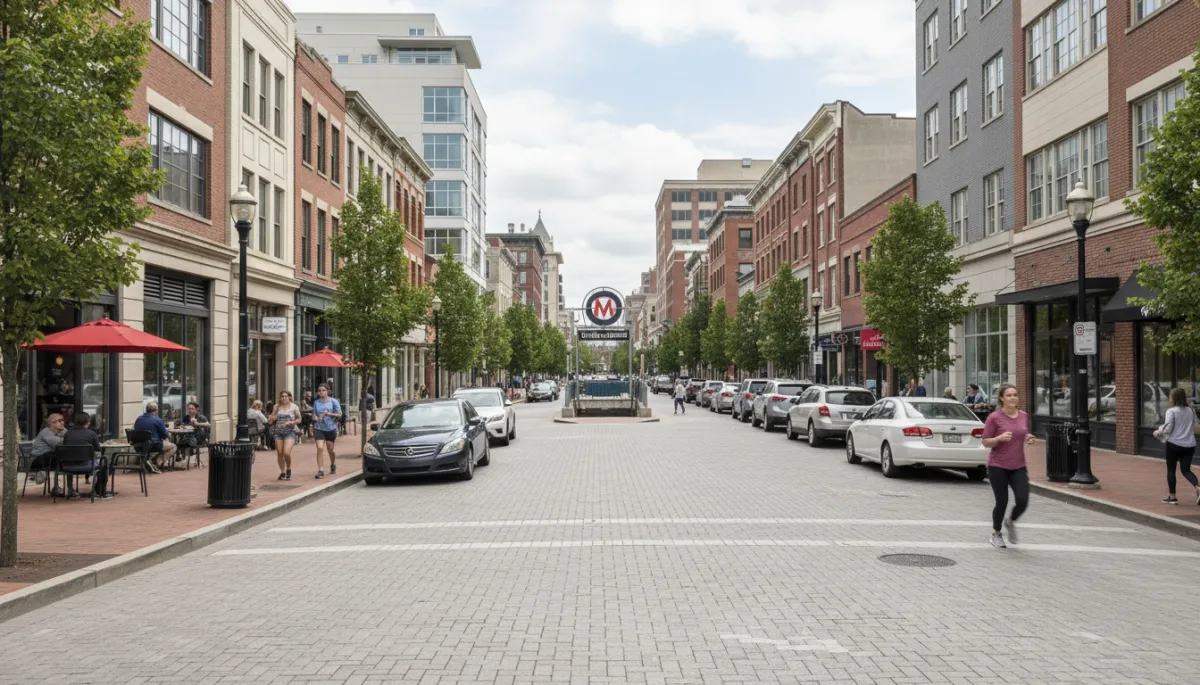
Falls Church combines small-city charm with strong Orange and Silver Line access.
Arlington: Urban Energy and Shorter DC Commutes
Commute & transit: While Arlington sits slightly east of Tysons, it is one of the most transit‑rich areas in the region. Multiple Orange, Silver, and Blue Line stations, plus direct access to I‑66 and the GW Parkway, make commutes into downtown DC and the Pentagon particularly efficient. For some buyers, living in Arlington and working in Tysons or DC in opposite directions is a realistic, Metro‑based lifestyle.
Lifestyle & housing: Arlington feels more urban, with dense corridors like Rosslyn‑Ballston offering high‑rise condos, modern apartments, and townhomes. Detached homes are available in quieter neighborhoods but come at a premium. With 2026 median prices in the mid‑ to high‑$700,000s and detached homes averaging much higher, Arlington tends to attract younger professionals, dual‑income households, and DC‑based government employees who prioritize a quick Metro ride and walkable amenities over yard size.
Reston: Transit‑Oriented, Amenity‑Rich, and (Relatively) Attainable
Commute & transit: Reston lies west of Tysons along the Silver Line, with several stations that connect directly through Tysons into DC. Typical travel times into the city are longer than from McLean or Arlington, but the trade‑off is more space and a strong community design. Many Reston residents use a combination of Metro, bike paths, and buses to reach both Tysons and DC, making it appealing for hybrid and remote professionals who do not commute daily.
Lifestyle & housing: Known for its lakes, trails, and village centers, Reston offers a master‑planned feel with a wide range of housing types: condos near the town center and Metro, stacked townhomes, and single‑family homes in leafy neighborhoods. Median prices in the mid‑$500,000s to around $600,000 (as of 2026) make it more attainable than many closer‑in markets, while still offering a straightforward rail commute.
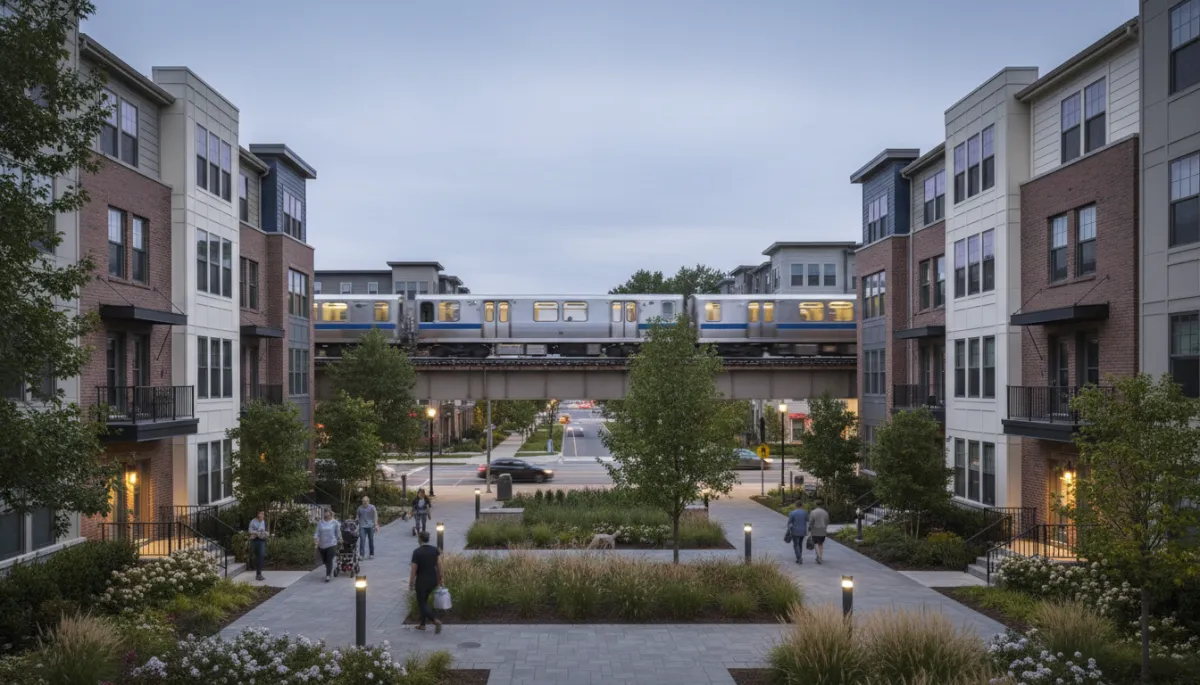
Reston’s mix of housing and Silver Line access appeals to hybrid workers.
Merrifield: Mosaic District Convenience and Central Location
Commute & transit: Merrifield, anchored by the Mosaic District, sits southeast of Tysons with quick access to I‑495, I‑66, and Route 29. The nearby Dunn Loring–Merrifield Orange Line station provides a direct rail route into DC, and short drives or bus rides connect residents to Tysons and other Silver Line stops. For buyers who split time between multiple job sites across the region, this central location can be a major asset.
Lifestyle & housing: Merrifield has transformed into a vibrant, mixed‑use hub with restaurants, retail, and entertainment. Housing includes modern townhomes, mid‑rise condos, and established single‑family neighborhoods nearby. Pricing often aligns with Vienna and Reston submarkets, offering a balance between affordability, access, and amenities that works well for young families and professionals who want an active, walkable environment.

Merrifield’s Mosaic District blends dining, shopping, and transit in one hub.
Matching Neighborhoods to Common Buyer Scenarios
Different buyers prioritize different aspects of the commute and lifestyle equation. Here is how these neighborhoods often line up for our clients:
Federal or government employees in downtown DC: Frequently gravitate toward Arlington, Falls Church, or McLean for direct Metro access and shorter ride times.
Families prioritizing schools and community feel: Often focus on McLean, Vienna, and certain parts of Falls Church, where single‑family housing and neighborhood cohesion stand out.
Hybrid professionals with Tysons and DC commitments: Commonly consider Reston and Merrifield, where Silver and Orange Line access plus flexible driving routes support varied schedules.
How to Choose the Right Neighborhood Based on Your Commute Preferences
When The Mike Webb Team walks buyers through this decision, we recommend starting with three questions:
How often do you commute to DC? Daily Metro riders may prefer Arlington, Falls Church, or McLean, while once‑or‑twice‑a‑week commuters can comfortably expand their search to Vienna, Reston, and Merrifield.
Do you want to walk to Metro, or are you comfortable driving or biking? If walking to a station is non‑negotiable, we will narrow in on specific pockets near Silver or Orange Line stops. If you are open to a short drive, your housing options broaden considerably.
What lifestyle are you seeking outside of work? For a quieter, suburban feel with larger lots, McLean and Vienna shine. For walkable nightlife and urban energy, Arlington and Merrifield stand out. For trails, lakes, and planned amenities, Reston is a strong contender.
📌 Key Takeaway: There is no single “best” neighborhood near Tysons for DC commuters—only the best match for your commute pattern, budget, and lifestyle priorities. A clear conversation about how you truly live and work is the fastest way to narrow the list.
Moving Forward with Confidence
The neighborhoods surrounding Tysons—McLean, Vienna, Falls Church, Arlington, Reston, and Merrifield—each offer strong commute options into Washington, DC, but they differ in Metro proximity, highway access, community atmosphere, and housing types. Understanding those nuances is essential to choosing a home that supports both your work life and your family’s day‑to‑day rhythm.
If you are considering a move and want to weigh commute realities against schools, budget, and long‑term resale value, The Mike Webb Team is here to provide clear, trustworthy guidance. We help homeowners and buyers evaluate each neighborhood with data, on‑the‑ground insight, and a focus on reducing stress, so you can move forward with confidence—whether your next chapter keeps you close to Tysons, closer to DC, or somewhere in between.