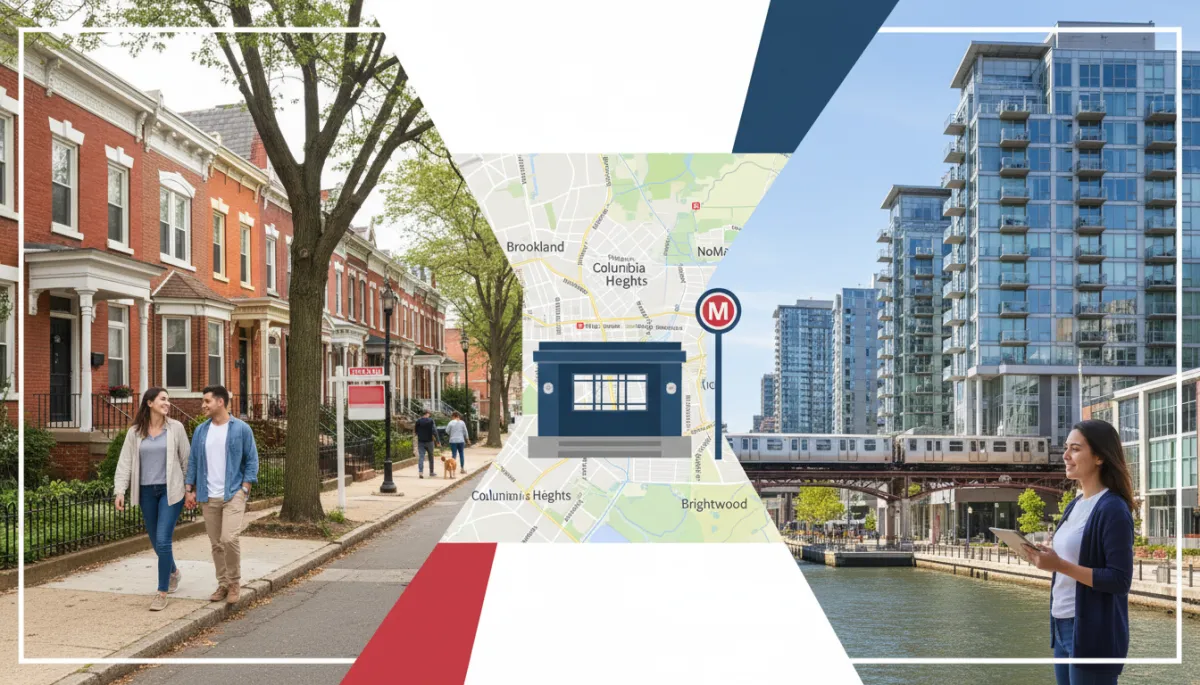
Best DC Neighborhoods for First-Time Homebuyers
Real Estate, Washington DC Neighborhoods, First-Time Homebuyers
What Are the Best Neighborhoods in Washington, DC for First-Time Homebuyers?
Buying your first home in Washington, DC is exciting—but it can also feel overwhelming. With prices, Metro lines, and neighborhood personalities to consider, it is easy to wonder where to start. This guide from The Mike Webb Team walks you through some of the best DC neighborhoods for first-time buyers, and how to match your lifestyle, budget, and long‑term plans to the right community.
The DC Market in 2026: Why First-Time Buyers Have an Opening
The 2026 Washington, DC market is more balanced than in recent years. Median sale prices are high—around the mid‑$600,000s according to several major portals—but year‑over‑year price changes are modest, even slightly negative in some reports. Homes are taking a bit longer to sell, and more properties are closing under list price than during the peak frenzy, giving first‑time buyers a bit more negotiating room than they had in 2021–2022 (Redfin, Zillow, Realtor.com).
At the same time, rents have climbed—around 8% year‑over‑year in some data—so putting your housing dollars toward ownership can make more sense than ever if you plan to stay at least five to seven years. The key is choosing a neighborhood that balances today’s affordability with tomorrow’s potential.
How to Choose the Right DC Neighborhood as a First-Time Buyer
Start with Your Lifestyle, Budget, and Future Plans
Rather than chasing a “hot” ZIP code, begin with three core questions:
Lifestyle: Do you want a quiet, residential feel with trees and single‑family homes, or a lively, urban environment with restaurants and nightlife on your doorstep?
Budget: How much can you comfortably invest each month, including mortgage, taxes, insurance, condo or HOA fees, and utilities—without stretching so far that you cannot save or travel?
Plans: Are you planning to grow your family, work from home more often, or potentially convert your first home into a rental in a few years?
The Mike Webb Team spends a great deal of time clarifying these questions with first‑time buyers. Once you are clear on what matters most, it becomes much easier to evaluate neighborhoods objectively rather than emotionally.
Why Metro Access and Commute Still Matter
Even in a world of hybrid work, Metro access remains one of the most important drivers of long‑term value in DC. Neighborhoods with reliable access to the Red, Green, and Blue/Orange/Silver lines tend to hold their value better and attract strong buyer and renter demand. When you evaluate a neighborhood, look beyond the map:
How far is the walk to the station—and is it well‑lit and comfortable year‑round?
Are there multiple transit options (bus lines, bike lanes, Circulator) if Metro has delays?
How long will your door‑to‑door commute actually take at your typical rush hour?
💡 Pro Tip: Do a “test commute” from a few homes you are considering at the time you would normally travel. It is one of the simplest ways to avoid buyer’s remorse later.
Condo Versus Row House: Which Is Better for a First-Time Buyer?
Many of DC’s best first‑time buyer neighborhoods offer a mix of condos and row houses. Each comes with trade‑offs in terms of cost, maintenance, and long‑term flexibility.
Condos: Lower Maintenance, Lower Entry Price, Monthly Fees
Often the most affordable entry point in amenity‑rich areas like NoMa, Navy Yard, and Southwest Waterfront.
Building handles exterior maintenance, major systems, and shared amenities—ideal if you prefer a low‑maintenance lifestyle.
Monthly condo fees can be significant, especially in full‑service buildings with pools, gyms, and 24‑hour front desks. Always factor these into your budget.
Row Houses: Space, Character, and Long-Term Flexibility
Common in neighborhoods like Capitol Hill, Petworth, Brookland, Columbia Heights, and Brightwood, row houses offer more space, private outdoor areas, and classic DC charm.
You are responsible for all maintenance and repairs, so a healthy reserve fund is essential.
Many row houses offer basement rental potential or room to grow, which can significantly support long‑term value and flexibility.
📌 Key Takeaway: Condos can make sense if you prioritize convenience and amenities in central locations. Row houses often suit buyers planning to stay longer, need more space, or want the option to add value over time.
Neighborhood Spotlight: Capitol Hill
Capitol Hill is one of DC’s most iconic neighborhoods, with leafy streets, historic row houses, and landmarks like Eastern Market and Lincoln Park. For first‑time buyers who love walkability, architecture, and a strong community feel, it is hard to beat. Median sold prices in the core Capitol Hill ZIP codes (20002 and 20003) range roughly from the mid‑$600,000s to the low‑$800,000s, reflecting high demand and limited inventory.
Housing types: Primarily classic brick row houses, many with English basements, plus some boutique condo conversions closer to H Street and Hill East.
Metro access: Capitol South, Eastern Market, and Union Station provide Blue/Orange/Silver and Red Line access; multiple bus routes and bike lanes enhance connectivity.
For first‑time buyers, Capitol Hill can be a stretch financially, but its long‑term value and timeless appeal are strong. If your budget is tighter, Hill East and pockets closer to RFK and the Anacostia River may offer slightly more attainable options, with future development around the RFK campus likely to support continued demand.
Neighborhood Spotlight: Brookland
Brookland, in Northeast DC, has become a standout choice for first‑time buyers who want space, a neighborhood feel, and Red Line access without Georgetown‑level prices. Recent data shows median sale prices in the low‑$700,000s, with some sources noting a notable year‑over‑year price decline, which can create opportunity for buyers as the area continues to evolve.
Housing types: A mix of smaller row houses, single‑family homes, and newer condo developments near Catholic University and along 12th Street NE.
Lifestyle: Tree‑lined streets, local restaurants and cafes, and a strong community vibe. Institutions like Catholic University and nearby medical centers keep rental demand steady.
Metro access: Brookland–CUA on the Red Line, plus bus routes and bike infrastructure.
For buyers who want a bit more yard, a quieter street, or the potential to add value over time, Brookland is worth a close look. Planned and ongoing development along Rhode Island Avenue and in adjacent Brentwood should continue to support long‑term value.
Neighborhood Spotlight: Petworth
Petworth, in Northwest DC, is a favorite among young professionals and growing families. It offers a balance of urban convenience and residential calm, with local restaurants, parks, and farmer’s markets. Median home prices hover around the high‑$700,000s to low‑$800,000s, with a generally balanced market and strong rent‑to‑price ratios for those thinking ahead to rental potential.
Housing types: Predominantly row houses—many with front porches and basements—along with some condo conversions and small multifamily buildings.
Metro access: Georgia Ave–Petworth on the Green/Yellow Line, with bus routes along Georgia Avenue and New Hampshire Avenue.
Petworth is well‑suited to first‑time buyers who want a classic DC row house with room to grow, and who value community events and neighborhood pride. Over the long term, its combination of transit, housing stock, and neighborhood amenities has supported steady demand.
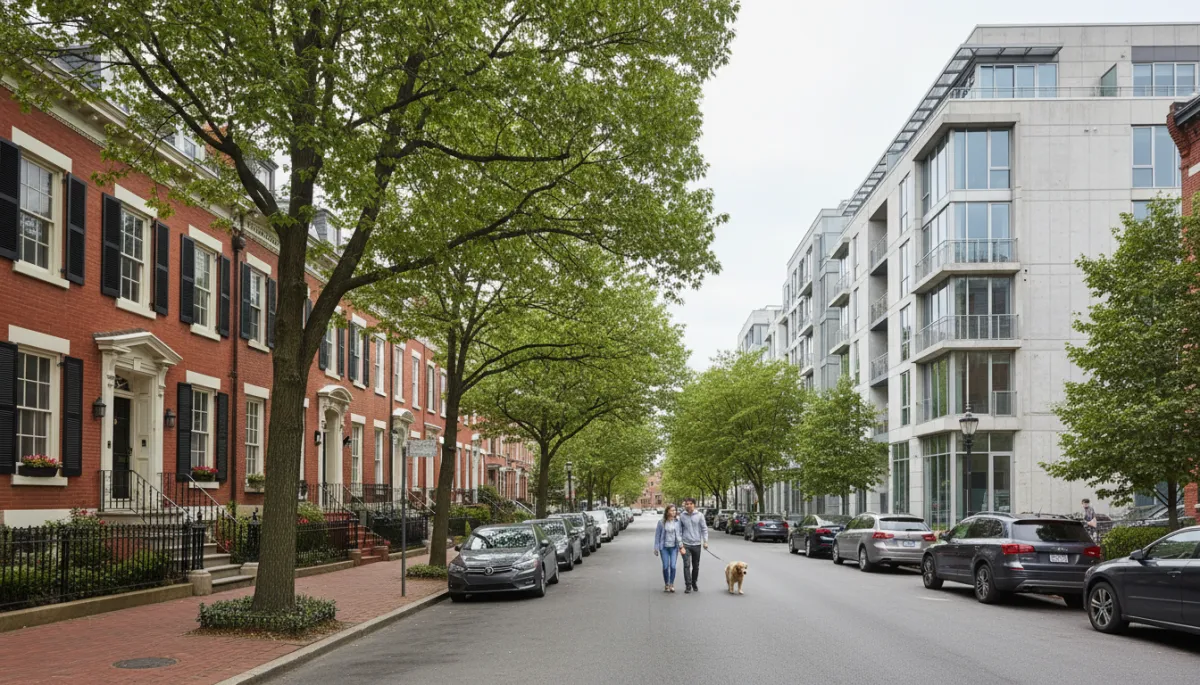
Many DC neighborhoods blend historic row houses with newer condo options for first-time buyers.
Neighborhood Spotlight: Navy Yard (Capitol Riverfront)
Navy Yard, also known as Capitol Riverfront, has transformed into one of DC’s most modern, amenity‑rich neighborhoods. It is ideal for first‑time buyers who want new construction, waterfront access, and a “lock‑and‑leave” lifestyle with restaurants, ballgames, and parks just outside the front door.
Housing types: Primarily newer condos and luxury apartment buildings, many with rooftop decks, gyms, and concierge services. Single‑family homes are rare here.
Metro access: Navy Yard–Ballpark on the Green Line, with easy access to major highways and bike trails along the Anacostia River.
For buyers who prioritize lifestyle and convenience over square footage, Navy Yard can be an excellent choice. Just be sure to weigh the cost of condo fees against your monthly budget and long‑term goals.
Neighborhood Spotlight: NoMa
NoMa (North of Massachusetts Avenue) has quickly become a hub for modern, transit‑oriented living. With Union Station and NoMa–Gallaudet Metro nearby, it offers outstanding connectivity for commuters who travel within DC or up and down the East Coast.
Housing types: Newer and recently built condo buildings with amenities, plus a growing number of mixed‑use developments with retail on the ground floor.
Lifestyle: Walkable to groceries, cafes, and entertainment, with quick access to H Street NE, Union Market, and downtown.
NoMa typically appeals to first‑time buyers who want a newer condo, strong Metro access, and the option to rent the property easily in the future. As with Navy Yard, it is important to analyze condo fees and building financials as part of your long‑term value assessment.
Neighborhood Spotlight: Southwest Waterfront (The Wharf and Surrounding Area)
The Southwest Waterfront, anchored by The Wharf, has seen a dramatic transformation, with new residential buildings, hotels, restaurants, and performance venues along the water. It offers a unique blend of waterfront living and urban energy.
Housing types: A mix of mid‑century cooperatives, newer condo buildings, and townhomes. The variety can give first‑time buyers different price points to consider within the same general area.
Metro access: Waterfront and L’Enfant Plaza stations provide Green/Yellow and Blue/Orange/Silver Line access, making commuting convenient.
For first‑time buyers, Southwest can offer strong long‑term value thanks to ongoing investment in the waterfront and surrounding infrastructure. As always, understanding each building’s financial health and rules—especially for co‑ops—is essential.
Neighborhood Spotlight: Columbia Heights
Columbia Heights offers a vibrant, diverse community with strong transit access and a wide range of housing options. It is a long‑time favorite for buyers who want city energy, a mix of national and local retailers, and access to nearby neighborhoods like Mount Pleasant and Adams Morgan.
Housing types: Classic row houses on quieter side streets, plus condo conversions and newer buildings closer to 14th Street and the Metro station.
Metro access: Columbia Heights on the Green/Yellow Line, with excellent bus connectivity and bike lanes.
From a long‑term value perspective, Columbia Heights benefits from its central location, walkability, and proximity to multiple in‑demand neighborhoods. For first‑time buyers, it can offer a strong balance of price, access, and lifestyle—especially if you are open to a condo in a converted row house or a slightly smaller property on a quieter block.
Neighborhood Spotlight: Brightwood
Brightwood, in upper Northwest DC, is an appealing option for buyers who want more space and a quieter pace without leaving the District. It is generally more affordable than many other NW neighborhoods, with entry‑level homes in the mid‑$400,000s to $600,000 range in some recent reports, depending on size and condition.
Housing types: A mix of row houses, detached and semi‑detached single‑family homes, and some smaller condo buildings. Yards and driveways are more common here than closer‑in neighborhoods.
Lifestyle: Residential and calm, with easy access to Rock Creek Park and nearby Takoma. It suits buyers who value space, greenery, and a neighborhood feel.
While Brightwood is a bit farther from downtown, improvements in nearby transit and continued investment in upper NW corridors help support its long‑term value. For first‑time buyers, it can be a smart choice if you prioritize square footage and outdoor space over a shorter commute.
The Role of Neighborhood Research and On-the-Ground Experience
Online data is helpful, but it never tells the whole story. Thorough neighborhood research means combining numbers with lived experience:
Visit at different times of day and week—weekday mornings, evenings, and weekends—to understand noise, parking, and activity levels.
Walk the blocks around any home you are considering. Notice lighting, sidewalks, and how well properties are maintained nearby.
Talk with neighbors if possible. Long‑term residents can share insights about changes, schools, and community engagement that do not show up in statistics.
💡 Pro Tip: The Mike Webb Team often helps buyers create a short list of “must walk” blocks in each neighborhood, so you can compare how each area truly feels before you write an offer.
Common Mistakes First-Time Buyers Make in Washington, DC
Buying your first home is a major step, and even savvy buyers can stumble. Some of the most common mistakes we see include:
Focusing only on the listing price. Ignoring condo fees, property taxes, and commuting costs can lead to a monthly payment that feels too tight once you move in.
Overlooking resale and rental potential. Even if you plan to stay for a decade, life can change. Choosing a neighborhood with steady demand and good transit access can make your home easier to sell or rent later.
Underestimating maintenance. Row houses, in particular, require ongoing care. Skipping a thorough inspection or failing to budget for repairs can create stress down the line.
Falling in love with finishes instead of fundamentals. Fresh paint and trendy fixtures are easy to change. Location, layout, natural light, and structural condition matter far more for long‑term satisfaction and value.
Balancing Today’s Needs with Long-Term Value
When you buy your first home, you are not just choosing where you will live for the next few years—you are also making a significant financial decision. Neighborhoods with strong Metro access, diverse housing stock, and ongoing investment in retail, parks, and infrastructure tend to hold their value better through market cycles.
Areas like Brookland, Petworth, Columbia Heights, and Brightwood offer a blend of relative affordability, community character, and future growth potential. Meanwhile, amenity‑rich districts like NoMa, Navy Yard, and Southwest Waterfront attract steady demand from renters and buyers who prioritize convenience and lifestyle, which can support long‑term value—especially for well‑located condos in financially sound buildings.
Partnering with the Mike Webb Team for a Confident First Purchase
As experienced advisors serving Northern Virginia, Maryland, and Washington, DC, The Mike Webb Team is dedicated to giving first‑time buyers clarity, confidence, and calm throughout the process. We help you:
Understand how different neighborhoods—Capitol Hill, Brookland, Petworth, Navy Yard, NoMa, Southwest Waterfront, Columbia Heights, Brightwood, and more—fit your lifestyle and budget.
Compare condo versus row house options with a clear picture of monthly costs, maintenance, and long‑term flexibility.
Avoid common first‑time buyer mistakes by focusing on fundamentals, future plans, and long‑term value—not just what looks good on listing photos.
Your first home should support the life you are building now and the one you envision five, ten, or fifteen years from today. With thoughtful neighborhood research, a clear understanding of your priorities, and expert guidance from The Mike Webb Team, you can step into homeownership in Washington, DC with confidence—and a lot less stress.