
Top Suburbs for DC Workers Seeking More Space
Real Estate, Washington DC Suburbs, Family-Friendly Neighborhoods, Commuting Options DC
Where Should I Live If I Work in Washington, DC but Want More House for My Money?
If you work in Washington, DC but crave a bigger home, a real backyard, and a neighborhood that actually fits your life—not just your job—then it’s time to look boldly beyond the District’s borders. Northern Virginia’s family-friendly suburbs offer serious space, strong schools, and smarter value, without cutting you off from the city that pays your paycheck.
Stop Settling: Why Staying in DC May Be Holding You Back
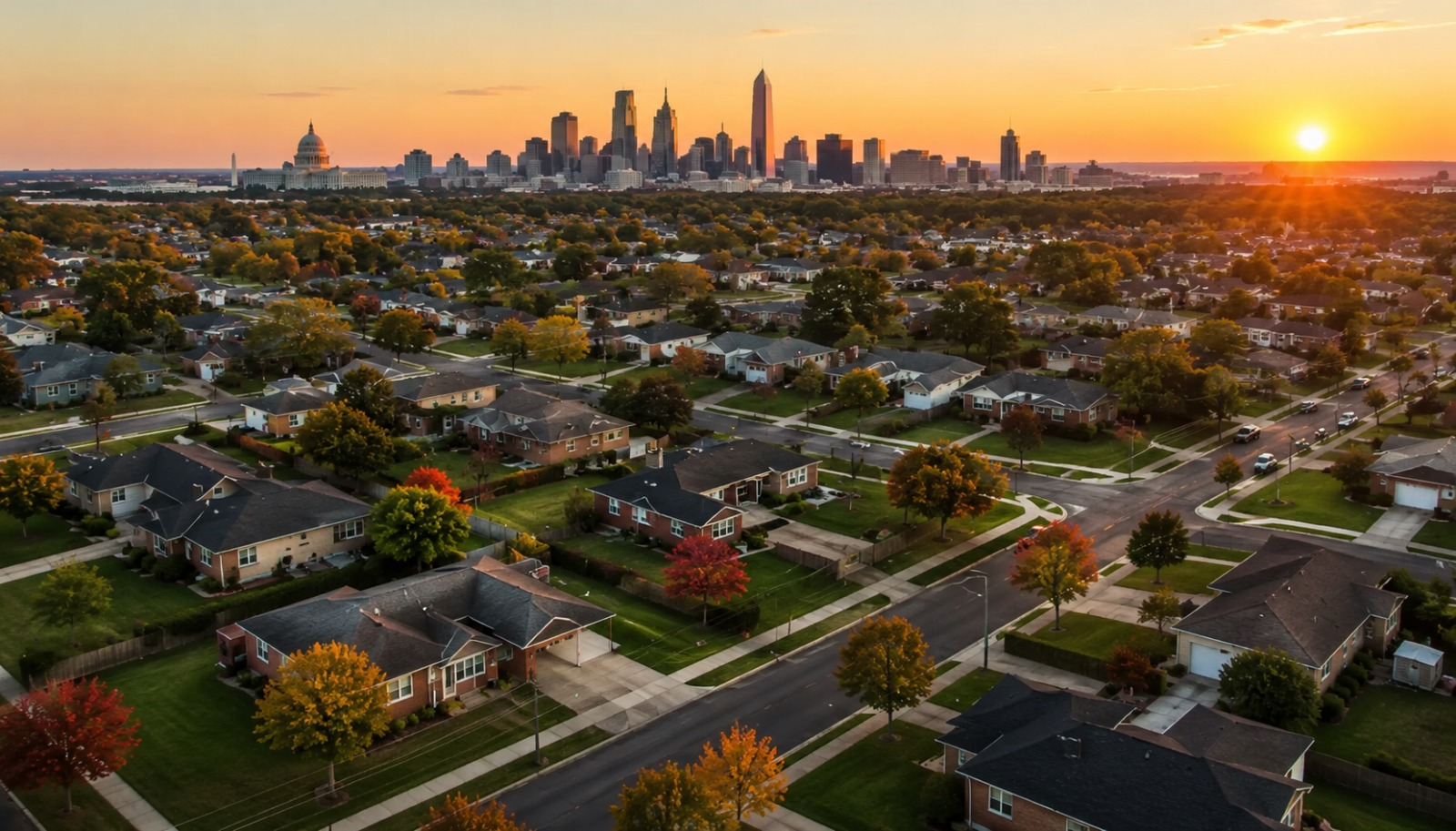
Let’s be honest: DC is incredible for work, culture, and energy—but it’s brutal if you want space. You can easily pour a massive budget into a rowhouse or condo that still leaves you squeezing around furniture, negotiating over the single bathroom, and hunting for parking. If you’re starting or growing a family, working from home more, or simply done with cramped living, staying in the city can quietly choke your lifestyle while draining your wallet.
The bold move? Look for affordable suburbs near DC where your money buys: larger homes, real yards, family-friendly neighborhoods, and strong schools—plus smart commuting options to DC that still keep your career front and center. The Mike Webb Team helps families make this shift every day, and we’ve seen the same story again and again: when you stop clinging to a DC address, you open the door to a dramatically better daily life.
📌 Key Takeaway: If your home doesn’t match your life, not just your job, it’s time to look beyond the Beltway.
The Big Trade-Off: Commute Time vs. Lifestyle (Get This Wrong, and You’ll Regret It)
Moving out of DC is not just a financial decision—it’s a lifestyle decision. You’re trading a shorter commute for:
Bigger homes and yards where kids can actually play and adults can actually breathe
Stronger school options and family-focused amenities
Quieter streets, community events, and a true neighborhood feel
The key is to be intentional. A 15-minute shorter commute is not worth it if you hate your tiny house, your block feels transient, or schools don’t match your expectations. On the flip side, a slightly longer commute can be completely worth it if it buys your family peace, space, and a community that feels like home.
💡 Pro Tip: Don’t just ask, “How long is the commute?” Ask, “What am I getting in return for every extra minute I spend on the road or rail?”
The Biggest Buyer Mistakes When Leaving DC (And How to Avoid Them)
When DC buyers start exploring the suburbs, we see the same bold mistakes over and over:
Focusing only on purchase price. A cheaper house in the wrong area is not a win. Longer commutes, weak schools, and poor resale potential can quietly cost you more in the long run.
Ignoring lifestyle factors. Buyers fall in love with square footage and forget to ask: Is this neighborhood truly family-friendly? Are there parks, sidewalks, and places we’ll actually use?
Underestimating commuting options. They assume driving is the only choice, when many suburbs offer buses, park-and-ride lots, and in some cases, direct Metro access that make daily life far easier.
Not thinking long-term. They choose a community that fits the next 18 months, not the next 5–10 years—then feel forced to move again just as life is getting settled.
The smartest buyers choose communities that match their long-term goals: family growth, school plans, work flexibility, and even eventual resale. That’s exactly where experienced guidance from a team like The Mike Webb Team becomes invaluable—we help you see beyond the listing photos and price tag.
Chantilly: Space, Schools, and a Strong Market Just Outside the City
If you want a bold balance of value, strong schools, and access to major job centers, Chantilly deserves a serious look. Located in Fairfax County and close to major corridors like Route 50 and Route 28, Chantilly offers larger single-family homes and townhomes in established, tree-lined neighborhoods—often with more yard and square footage than you’d ever touch in DC at a similar budget.
The housing market here is competitive and resilient. As of mid-2026, typical home values hover around the low $800Ks, with actual sale prices often in the $700K–$725K range depending on property type and neighborhood (sources: Zillow, Redfin, Realtor.com). Homes move quickly—median days on market can be under three weeks—because buyers recognize the strong mix of location, schools, and lifestyle.
For DC commuters, Chantilly offers:
Direct access to major employers in Fairfax, Reston, and Tysons, with DC reachable via I‑66, Route 50, or park-and-ride bus options
Strong Fairfax County schools and numerous youth sports, parks, and community programs
For families who want a suburban feel without feeling “too far out,” Chantilly hits that sweet spot: big enough to have everything you need, close enough that the commute still feels manageable—especially if you have hybrid or flexible work.
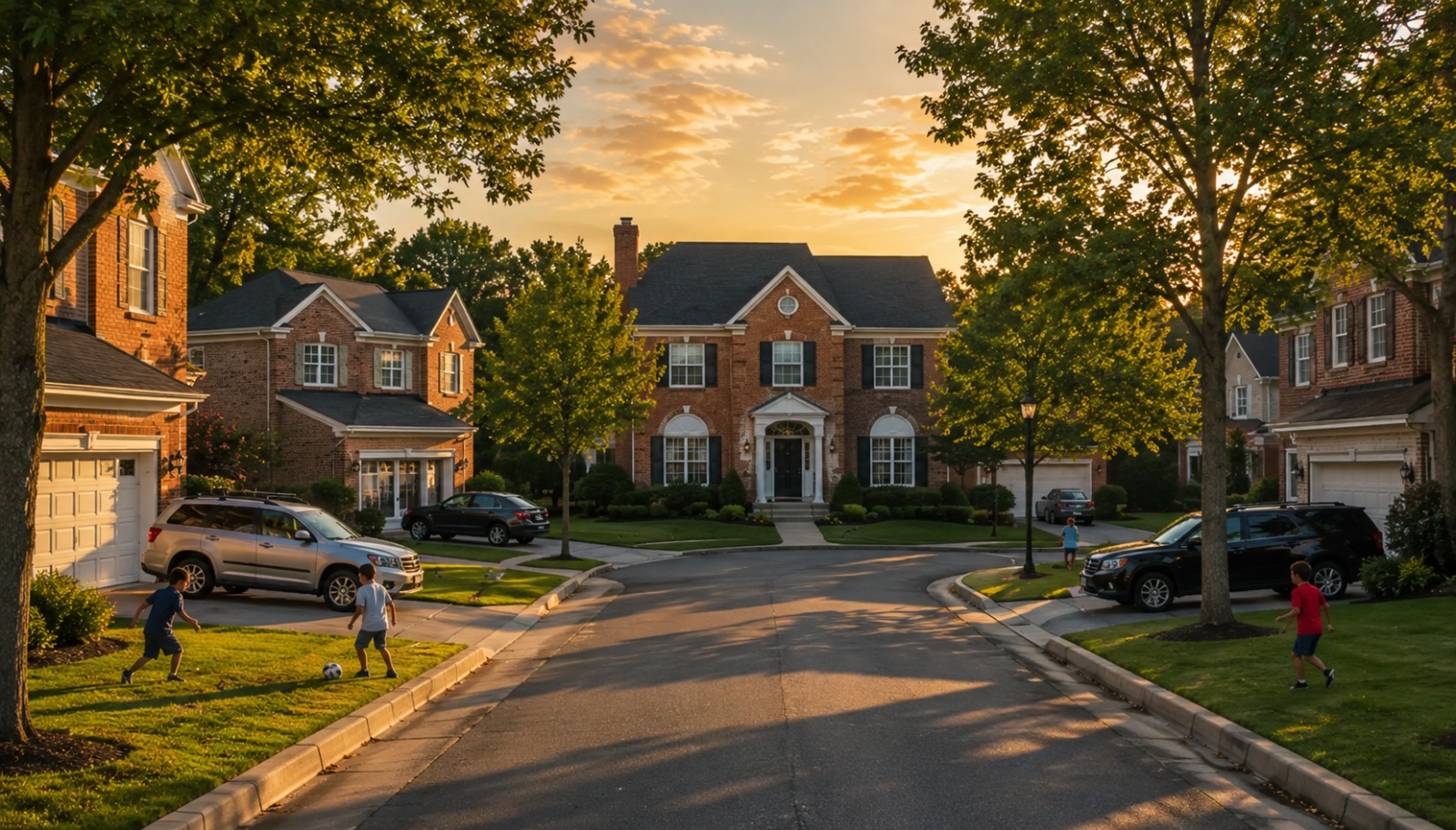
The right suburb turns your daily routine into a calmer, more spacious life.
Centreville: A Growing, Walkable Vision with Big-Home Potential
Centreville is one of Northern Virginia’s boldest transformation stories. Long known for its larger homes, access to I‑66, and proximity to parks like Bull Run Regional Park, it’s now being reimagined as a more walkable, people-centered suburban hub. Fairfax County recently adopted a major long-range plan that emphasizes a defined town center, mixed-use development, better transit access, and expanded housing options. (sources: Fairfax County, Northern Virginia Magazine)
What does that mean if you work in DC? It means you can own a larger home—often with generous lots, garages, and multiple living spaces—while watching your community gain more walkability, amenities, and long-term value. Planned improvements include safer pedestrian connections, potential future transit expansions, and more integrated community spaces. For buyers thinking long-term, that’s powerful.
Commute-wise, Centreville offers direct access to I‑66, commuter lots, and bus routes into DC and surrounding job centers. It’s ideal for buyers willing to trade a bit more drive time for:
Substantial square footage and larger yards
Access to regional parks, trails, and outdoor recreation
A community that’s actively investing in its future walkability and livability
Ashburn: Silver Line Access Meets Suburban Comfort
If you want a larger home in a polished, master-planned environment and a powerful transit option into the city, Ashburn should be on your shortlist. The extension of the Metro’s Silver Line into Loudoun County changed the game: the Ashburn Station now connects you directly to Dulles Airport, Reston, Tysons, Arlington, and DC without ever touching the wheel. (source: Loudoun County & WMATA transit updates)
Ashburn is packed with family-friendly neighborhoods, from townhome communities with shared green spaces to larger single-family homes with generous backyards. Many developments feature pools, trails, playgrounds, and HOA-maintained amenities that make daily life feel resort-like compared to city living. Schools in this part of Loudoun County are consistently strong, which is a major draw for families planning.
Commuting options to DC from Ashburn are impressively flexible:
Silver Line Metro from Ashburn Station, with parking garages and feeder buses that make “park-and-ride” a smooth daily habit
Loudoun County Transit buses, including commuter routes to DC, Rosslyn, and Pentagon during peak hours
Park-and-ride lots and carpool/vanpool programs for more customized commuting
For buyers who want “more house for the money” but refuse to sacrifice a reliable path into DC, Ashburn delivers a bold combination of space, schools, and serious transit infrastructure.
South Riding: Tight-Knit, Planned, and Deeply Family-Focused
South Riding is the definition of a family-first community. This planned neighborhood in Loudoun County is packed with cul-de-sacs, sidewalks, community pools, playgrounds, and HOA events that actually bring neighbors together. If you’re searching for a place where kids ride bikes, neighbors talk on driveways, and community Facebook groups buzz with local happenings, South Riding is a bold contender.
Homes here include townhomes and larger single-family properties, many with open-concept layouts, finished basements, and usable yards. You’ll often find more modern floor plans and newer construction than in closer-in suburbs, which can be a huge win if you work from home or want a dedicated office, guest space, or media room.
For commuting into DC, you’ll likely drive to major routes like Route 50, Route 28, or I‑66, or use park-and-ride options and commuter buses. It’s a bolder trade-off: a bit more commute in exchange for a community deeply aligned with raising a family, with strong schools and a lifestyle that supports busy parents and active kids.
Gainesville: Big Homes, Big Amenities, and Room to Grow
Drive west on I‑66, and you’ll hit Gainesville, a Prince William County community that has exploded with growth over the last decade. Here, “more house for your money” is not a slogan—it’s obvious the moment you pull into many of its neighborhoods. You’ll find large, often newer single-family homes, golf course communities, and townhomes with generous square footage and modern finishes.
Gainesville is packed with shopping centers, restaurants, movie theaters, and everyday conveniences, so you’re not driving back toward DC for basic needs. Many communities include pools, walking trails, and playgrounds, making it easy to build a full life close to home. For many DC workers, Gainesville hits the sweet spot between affordability and quality of life, especially for growing families who need multiple bedrooms, flexible living spaces, and real outdoor areas.
The commute into DC is longer than closer-in suburbs, typically using I‑66 and park-and-ride lots with commuter buses. But if you have hybrid work, flexible hours, or a spouse who works closer to home, the lifestyle payoff can be tremendous. You’re betting boldly on space, comfort, and long-term livability.
Haymarket: Small-Town Charm with Serious Space
Just beyond Gainesville lies Haymarket, a community that blends small-town charm with impressive homes and scenery. If your dream is a quieter, more relaxed pace without giving up access to DC, Haymarket deserves a close look. Many neighborhoods feature larger lots, mountain or golf course views, and homes that feel more like retreats than just houses.
Haymarket offers a historic downtown, local shops and restaurants, and proximity to outdoor recreation. It’s ideal for buyers who want a strong sense of community and don’t mind being a bit farther out—as long as they’re getting an exceptional home and a lifestyle that feels aligned with their long-term goals.
Commuting options center around I‑66, park-and-ride lots, and commuter buses, making daily DC trips possible, especially if you’re strategic about timing. For many families, Haymarket is where they finally feel like they’ve “made the leap” into the kind of home and neighborhood they always pictured for their future.
How to Choose the Right Community for Your Long-Term Life, Not Just Your Next Year
Every suburb we’ve covered—Chantilly, Centreville, Ashburn, South Riding, Gainesville, and Haymarket—offers a different blend of value, commute, and lifestyle. The bold move is not just picking the one with the “prettiest house” or lowest monthly payment. It’s choosing the community that aligns with your long-term goals and lifestyle needs.
Ask yourself:
Where do I realistically see my family in 5–10 years—schools, activities, work patterns, aging parents?
Do I value a shorter commute more, or a bigger, more comfortable daily life at home?
Do I want a bustling, amenity-rich suburb or a quieter, small-town feel?
How important are schools, parks, and kid-friendly amenities to my decision—now and in the future?
The right answer isn’t the same for everyone. That’s why cookie-cutter advice and generic “top suburbs” lists fall short. You deserve a plan tailored to your family, your work, and your future.
📌 Bold Reminder: Your home is not just an address—it’s the stage for your next chapter. Choose the community that supports that chapter, not just your commute.
Ready to Trade Cramped DC Living for More Home and Less Stress? Talk to The Mike Webb Team.
If you’re working in Washington, DC and feeling squeezed by your current home, you don’t have to guess your way through the suburbs. The Mike Webb Team specializes in helping families move forward with confidence—selling strategically, buying wisely, and landing in communities that truly fit their lives, not just their jobs.
We’ll walk you through:
Which affordable suburbs near DC best match your budget, commute tolerance, and lifestyle priorities
How Chantilly, Centreville, Ashburn, South Riding, Gainesville, and Haymarket compare on schools, amenities, and long-term value
Smart strategies to sell your current home for maximum value while minimizing stress and disruption for your family
You don’t need another generic online search—you need clear, trustworthy, local insight from experienced advisors who understand both the DC job market and Northern Virginia’s neighborhoods in depth. That’s exactly what The Mike Webb Team delivers, every single day.
If you’re ready to boldly step out of cramped city living and into a home—and a community—that finally feels right, reach out to The Mike Webb Team today. Let’s talk about your commute, your lifestyle, your long-term goals, and the neighborhoods that can bring all of that together with clarity and confidence.
Your next chapter doesn’t have to be smaller, more stressful, or more expensive. With the right guidance, it can be bigger, calmer, and unmistakably yours.