

Arlington VA Home Buying: Now or 2027?
Real Estate, Arlington VA Housing Market, Home Buying Timing
Is Now a Good Time to Buy a Home in Arlington, VA or Should You Wait Until 2027?
With Arlington home prices near record highs and mortgage rates hovering around 7%, many buyers are wondering whether it makes more sense to purchase now or sit tight until 2027. Here’s a clear, data‑driven look at both options so you can decide what fits your life and budget.
The Arlington Market in Late 2026: Still a Seller’s Market, But Cooling at the Edges
Arlington remains a tight seller’s market. Inventory has improved modestly, yet demand is strong enough that sellers are still getting very close to asking price. Recent data shows a sale‑to‑list ratio around 99.9%–100%, meaning most homes sell for essentially what they’re listed for (HomeWorth Radar, Opendoor).
Median sale prices across Arlington cluster between $800,000 and $850,000, depending on the source and exact month (Zillow, Redfin, Realtor.com, Bright MLS). Bright MLS reported a median of about $823,000 in July 2026, up roughly 16% year‑over‑year, while Redfin’s three‑month average sits around $849,000. Single‑family homes are even more expensive, averaging about $1.6 million (ArlNow).
Homes don’t linger for long. Depending on the dataset, median days on market range from about 11 to the mid‑30s, which is fast by historical standards (Redfin, Bright MLS, HomeWorth Radar). Inventory has ticked up—Northern Virginia overall has about 2.08 months of supply, and Arlington sits near 2.4 months—but that’s still well below a balanced market (NVAR, Bright MLS).
The Mortgage Rate Backdrop: Expensive Money, Uncertain Future
The other half of the equation is financing. As of late September 2026, the average 30‑year fixed mortgage rate is near 7.0%, with multiple trackers showing similar numbers—Freddie Mac at about 7.03%, Mortgage News Daily around 7.26%, and Experian at roughly 7.10%. Fifteen‑year loans are slightly lower, in the 6.4%–6.6% range (Freddie Mac, MonitorBankRates, Experian).
For many buyers, this is the sticking point: high prices plus high rates make monthly payments feel steep. Waiting until 2027 might mean catching lower rates—but it could also mean facing even higher prices if Arlington continues its long‑term climb.
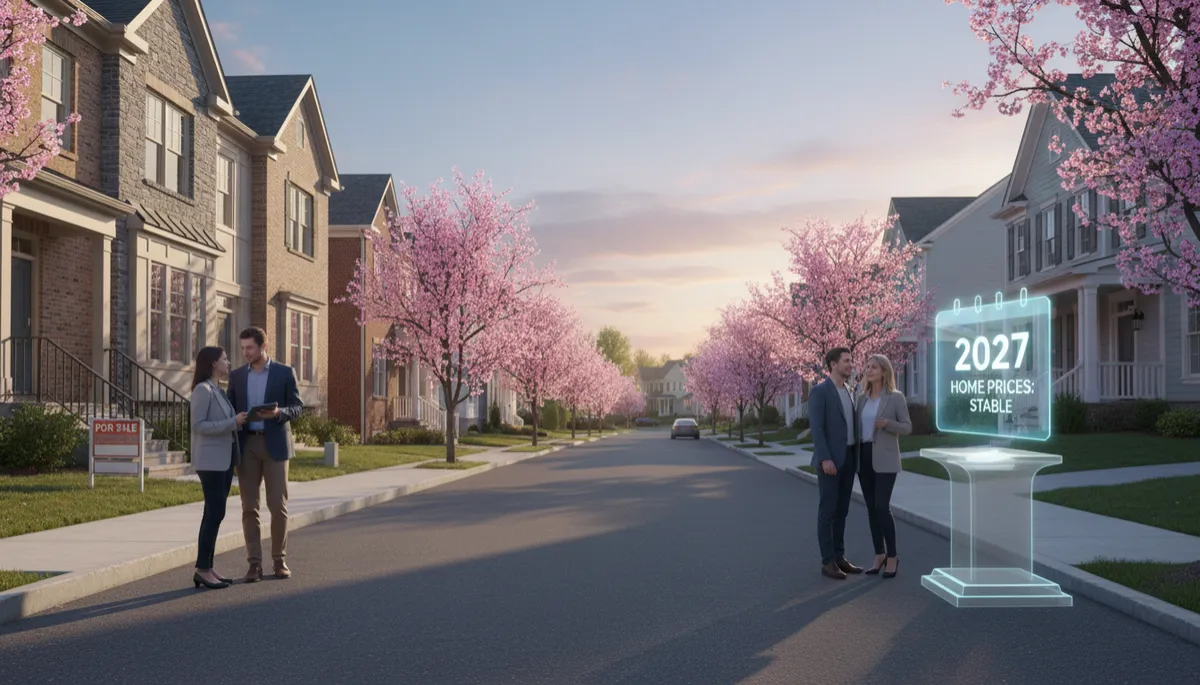
Balancing today’s 7% rates against rising Arlington prices is the core tradeoff.
Is Now a Good Time to Buy a Home in Arlington, VA?
The honest answer: it can be—if your finances and time horizon are right. Here are reasons buying now may make sense:
Prices are high, but momentum is moderating. County‑wide, some data shows only 0.4% to low‑single‑digit annual price growth recently (HomeWorth Radar), even though year‑over‑year stats still look strong. That suggests the frenzied run‑up is easing, giving buyers a bit more breathing room than in 2021–2023.
Inventory is better than a year ago. Active listings in Arlington are up roughly 11% year‑over‑year, and Northern Virginia overall has seen an 18.5% jump in active listings (Realtor.com, NVAR). More choice can mean less pressure to waive every contingency and more ability to negotiate repairs or credits.
Price cuts are happening. Around 22–25% of listings see a reduction (HomeWorth Radar), and local reports show dozens of “just reduced” properties at any given time (ARLnow). You may not get a deep discount in a prime neighborhood, but there is room to find value—especially in condos and townhomes, where inventory has surged.
You can always refinance; you can’t roll back prices. If you buy now and rates drop in 2027 or 2028, you may be able to refinance into a lower monthly payment. If prices keep rising, however, waiting could mean paying tens of thousands more for a similar home.
📌 Key Takeaway: If you plan to stay in your home for at least 7–10 years and can comfortably afford payments at today’s rates, buying now in Arlington can lock in a scarce asset in a historically resilient market. Partnering with The Mike Webb Team can also help you uncover off‑market opportunities, evaluate neighborhoods, and negotiate effectively in this still‑competitive environment.
When Waiting Makes Sense: Should You Hold Off Until 2027?
Despite Arlington’s strength, there are valid reasons to consider waiting until 2027—especially if your situation is borderline at current rates and prices.
You’re stretching too far at 7%. If today’s payment would leave you “house‑poor,” it’s wise to pause. Use the next 12–18 months to improve your credit, pay down debt, and grow your down payment. Shaving even half a point off your rate or avoiding private mortgage insurance can save hundreds per month. A strategy session with The Mike Webb Team and a trusted local lender can help you map out that plan.
You’re flexible on neighborhood or even location. Buyers targeting the most competitive Arlington zip codes may feel intense pressure now. If you’re open to a broader search (South Arlington, nearby Fairfax or Alexandria, or a condo instead of a single‑family), taking more time to research options could pay off.
You believe rates will fall faster than prices rise. No one can guarantee the path of rates, but if 30‑year mortgages were to drop from ~7% to, say, the mid‑5s by 2027 while prices only rise modestly, your long‑term cost of ownership could be lower by waiting. That’s a calculated bet, not a certainty.
⚠️ Warning: Waiting is not risk‑free. Northern Virginia prices have a long track record of resilience due to strong job centers, limited land, and ongoing demand. If rates stay higher for longer and prices continue up, sitting out could cost more than buying sooner. Working closely with The Mike Webb Team can help you monitor shifts in both prices and rates so your decision is based on the latest local data, not headlines.
How to Decide: A Simple Framework for Arlington Buyers
To choose between buying now and waiting until 2027, focus less on trying to time the market perfectly and more on your personal fundamentals:
Stability: Are you confident you’ll stay in the area for at least 5–7 years? If yes, you’re more likely to ride out short‑term rate or price swings.
Affordability: Can you comfortably afford a payment at today’s rates, plus taxes, insurance, and maintenance, while still saving for other goals?
Buffer: Do you have an emergency fund of at least 3–6 months’ expenses after your down payment and closing costs?
Priorities: Is owning in Arlington now—short commute, schools, lifestyle—worth the premium, or would renting a bit longer align better with your current stage of life?
Bottom Line: Buy Now or Wait Until 2027?
Now may be a good time to buy in Arlington if you have strong finances, a long‑term horizon, and you find a home that genuinely fits your needs. You’ll benefit from slightly less competition than in peak spring markets, growing inventory—especially in condos and townhomes—and the option to refinance later if rates fall.
Waiting until 2027 can be sensible if today’s numbers feel uncomfortably tight or you need time to strengthen your financial position. Just recognize that you’re trading the possibility of lower rates for the risk of higher prices and renewed buyer competition, particularly if the broader economy stabilizes and demand surges again.
Ultimately, the “right time” is when the numbers work on paper and the move makes sense for your life. Use current market data as a guide, not a stopwatch—and consider speaking with a local Arlington agent and a trusted lender to stress‑test both scenarios before you decide. For personalized guidance, neighborhood insights, and a clear step‑by‑step plan, reach out to The Mike Webb Team to walk through your options in detail.
In simple terms, buy now if you’re financially ready and plan to stay put, and wait if you need more time to build a stronger foundation. Either path can be smart—as long as it’s intentional, not reactive.
💡 Pro Tip: Take 20 minutes to run two side‑by‑side scenarios: buying now vs. waiting until 2027. Compare monthly payments, estimated price changes, and your savings goals. Then, schedule a conversation with The Mike Webb Team and a local lender to review your numbers, explore neighborhoods, and map out a concrete plan—whether that means starting your home search this season or preparing for a strategic move in 12–18 months.