Cost of Living in Falls Church, VA: Is It Worth It?
Real Estate, Falls Church, VA, Cost of Living
What’s the Cost of Living in Falls Church, VA, and Is It Worth It?
Thinking about a move to Falls Church, VA, and wondering if the price tag really matches the lifestyle? You’re not alone. As experienced advisors with The Mike Webb Team, we talk every week with families weighing the same question: “It’s expensive… but is it worth it for us?”
Yes, Falls Church Has a High Cost of Living
Let’s start with the honest news: Falls Church is not a budget market. According to recent data from Salary.com, overall living expenses here are about 43% higher than the U.S. average, and HomeSnacks pegs the cost-of-living index as high as 184—that’s 84% above the national average. A single person might spend around $3,543 per month, while a family of four can be closer to $7,803.
The biggest driver behind those numbers? Housing. But everyday expenses play a role too, so let’s break it down in a friendly, practical way.
Housing Expenses: The Real Budget Buster
If you’ve peeked at listings, you’ve already felt it: housing in Falls Church is steep. Recent reports show:
Median home values roughly in the $791,000–$939,000 range, with Falls Church City single-family homes often near $976,000.
Broader area median sale prices between about $762,000 and $905,000, depending on the source and exact neighborhood.
On the rental side, most recent averages put apartments around $2,000–$2,500 per month, with studios in the $1,570–$1,800 range and three-bedrooms often $3,000 or more. Zumper notes median rents are roughly 46% above the national average.
💡 Friendly Tip: In Falls Church, updated homes in walkable pockets near Metro stations often command a premium—but they also tend to hold value well and sell quickly when it’s time for you to move on.
Everyday Living Costs: Not All Bad News
Once you get past housing, the rest of the budget is a bit more forgiving. Salary.com estimates monthly costs for a single person roughly like this:
Food: about $397/month—actually just under the national average.
Energy & utilities: around $150–$200/month, depending on season and home size.
Transportation & healthcare combined: about $701/month, slightly below U.S. averages.
In plain language: your mortgage or rent will probably sting, but your grocery cart and gas tank may not feel wildly different from what you’re used to in other metro areas. The key is building your budget around that reality from day one.

Everyday costs like groceries are manageable here; housing is where most of the stretch happens.
Why Is Falls Church So Expensive in the First Place?
Several factors contribute to Falls Church’s high cost of living:
Location, location, location: You’re minutes from Washington, D.C., major job centers, and two Metro lines. That access commands a premium.
High incomes: Median household income here often falls in the $143,000–$165,000 range. Higher incomes support higher prices, especially for housing.
Limited land, strong demand: The “Little City” is truly little. There’s not much room to build, so competition for well-located homes stays strong.
Schools and services: Highly regarded schools, walkable amenities, and city services all add to the perceived value—and the price tag.
The Lifestyle Benefits: What You Get for the Money
Here’s where the conversation shifts from “How much does it cost?” to “What do we actually get for what we’re paying?” For many of our clients, the lifestyle is what makes Falls Church feel worth it:
Shorter commutes: Being closer in can mean less time in traffic and more time at home—huge for busy families.
Walkable “Little City” feel: Local coffee shops, parks, restaurants, and community events give Falls Church a small-town vibe in a big metro area.
Strong schools: For many buyers, the school system is a major part of the value equation, especially compared to outlying suburbs.
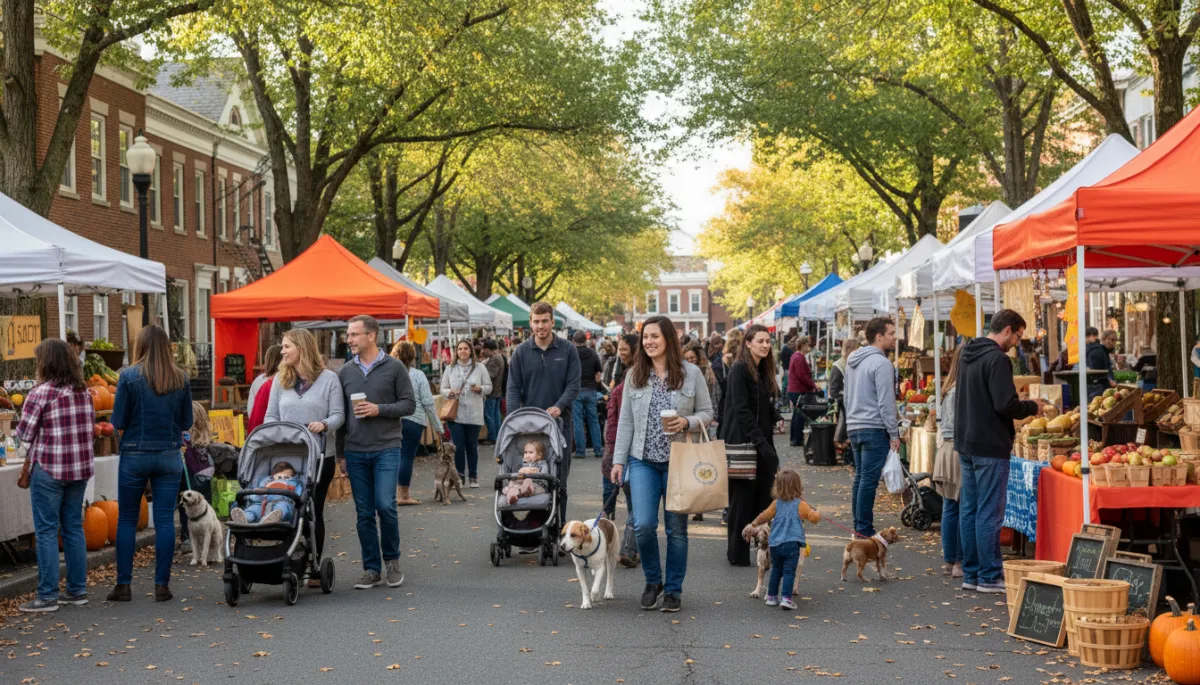
Community events, walkable streets, and local businesses add real everyday value beyond the numbers.
Real Buyer Stories: When It Is—and Isn’t—Worth It
With The Mike Webb Team, we’ve seen just about every version of the Falls Church decision. A few examples (with names changed for privacy) might help you picture where you fit:
Alex and Priya: Two busy professionals with one toddler. Their priority was cutting commute time and getting into a strong school pyramid. They stretched for a smaller single-family home near Metro and now say the extra time together every evening is “worth every penny.”
Mark and Denise: Empty nesters who thought they wanted Falls Church City, but once we walked through their actual goals (more space for grandkids, lower monthly payment, room for hobbies), they chose a nearby Fairfax County neighborhood instead. They saved money and still feel connected to everything they love.
Their stories highlight an important truth: the same city can be perfect for one family and a poor fit for another—and that’s okay.
Common Mistakes Buyers Make in Falls Church
In a high-cost, competitive market like this, a few missteps can create a lot of stress. Here are some of the mistakes we gently steer buyers away from:
Chasing the “perfect” zip code only: Focusing so hard on a tiny area that you overlook nearby neighborhoods that fit your lifestyle and budget better.
Ignoring total monthly costs: Looking only at the purchase price and not at taxes, insurance, utilities, and commuting costs, which all add up every single month.
Underestimating renovation costs: Hoping to “fix it up later” without a realistic budget for updates in a higher-priced market.
💡 Pro Tip from The Mike Webb Team: Before you fall in love with a house, fall in love with a clear, honest monthly budget. That’s what keeps the move exciting instead of overwhelming.
The Real Question: What Are Your Goals?
Falls Church isn’t “worth it” or “not worth it” in a vacuum. It’s only answerable when we look at your life:
How important is commute time versus square footage?
Do you value walkability and community events more than a larger yard?
Are top-tier schools a must-have or a nice-to-have for your stage of life?
Every buyer’s situation is genuinely unique. That’s why our first conversation at The Mike Webb Team is never about specific houses—it’s about clarifying your goals, your budget, and your timeline. Once those are clear, the question of “Is Falls Church right for us?” usually answers itself pretty quickly.
Is Falls Church Worth It for You?
If you’re drawn to a close-in, community-focused, high-amenity lifestyle and your budget can comfortably support higher housing costs, Falls Church can be an incredibly rewarding place to call home. If stretching to buy here would keep you up at night, there may be nearby options that honor your goals and your peace of mind.
Either way, you don’t have to figure it out alone. As trusted, experienced advisors, The Mike Webb Team is here to walk you through the numbers, the neighborhoods, and the trade-offs—so you can move forward with clarity, confidence, and a lot less stress.