Is Falls Church, VA a Good Place to Live?
Real Estate, Falls Church, VA, Community Guide
Is Falls Church, VA a Good Place to Live?
If you are weighing a move in Northern Virginia and wondering whether Falls Church is the right fit, you are not alone. As real estate advisors with The Mike Webb Team, we talk with families every week who are drawn to its small-town feel, strong schools, and easy access to Washington, D.C.—but also want clarity on prices, competition, and lifestyle before they commit.
Where Is Falls Church, VA—and What Makes Its Location Special?
Falls Church sits in the heart of Northern Virginia, roughly 7–10 miles from downtown Washington, D.C. It is a compact, 2.2‑square‑mile independent city bordered by Arlington, Fairfax, and the larger Falls Church mailing area in Fairfax County. This prime location offers a rare combination: suburban calm with true urban access. For many buyers, the ability to enjoy neighborhood block parties on Saturday and be on Capitol Hill by Monday morning is exactly the balance they are seeking.
Small-Town Charm with Big-City Access and Walkable Neighborhoods
Despite its proximity to D.C., Falls Church feels intimate. Neighbors know each other, kids walk or bike to school, and you will often see familiar faces at the Saturday farmers market. Many streets feature sidewalks, mature trees, and a mix of bungalows, colonials, and newer homes that make casual evening walks part of daily life. Areas around Broad Street, the West Falls redevelopment, and the East Falls Church Metro are particularly walkable, with cafés, parks, and schools all within a short stroll for many residents.
Schools: A Major Draw for Families Moving to Falls Church
For many of our clients, highly rated schools are the number‑one reason Falls Church rises to the top of their list. Falls Church City Public Schools hold an A+ rating from Niche and rank among the top districts in Virginia and the Washington, D.C. region (Niche 2026). State data shows “Distinguished” performance across all schools, with reading, science, and history pass rates leading the state (Virginia School Quality Profiles).
Nearby Fairfax County schools that serve parts of the Falls Church area vary more in performance, so it is important to understand whether a home is in the City of Falls Church or the broader Falls Church mailing address—this is an area where tailored guidance from a local team like The Mike Webb Team can protect your long‑term value and school options.
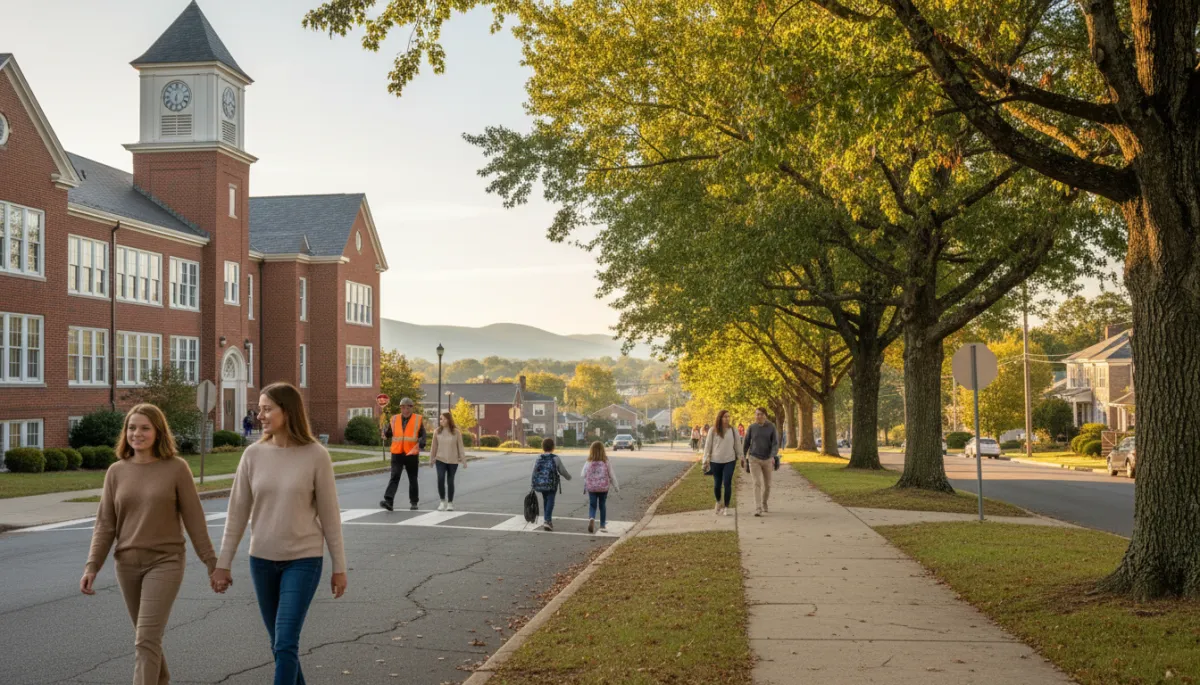
Top-ranked local schools are a primary reason many families choose Falls Church.
Community Events and Everyday Life
Falls Church’s calendar is packed with community events that reinforce its small‑town character. Year‑round, residents enjoy the Saturday farmers market at City Hall, summer Concerts in the Park, and seasonal favorites such as the Memorial Day Parade & Festival, Taste of Falls Church, Farm Day, Halloween Carnival, and a Holiday Gift & Craft Show (City of Falls Church). Add in neighborhood block parties, youth sports, and senior programs, and it becomes clear why so many buyers describe Falls Church as “cozy but connected.”
Housing Options, Neighborhoods, and the 2026 Housing Market
Within the city’s compact footprint, buyers will find a surprisingly broad range of housing options: charming mid‑century single‑family homes, expanded and renovated colonials, modern townhomes, luxury new builds, and a growing selection of condos near transit. Popular neighborhoods include the streets around Oak Street Elementary, the Little City’s historic core near Broad Street, and areas close to East Falls Church and West Falls Metro for those prioritizing car‑light living.
The housing market here remains one of the strongest in the region. Depending on the data source and property type, recent median sale or home values generally fall between about $650,000 and just over $1.1 million, with single‑family homes often toward the higher end (Redfin, Zillow, Realtor.com, ClosingIQ). Some sources show slight price softening year‑over‑year, others modest gains, but most agree on two points: inventory is limited and demand is steady. Sale‑to‑list ratios hovering around or above 100% signal that well‑priced homes still attract strong interest.
💡 Market Insight: Even when prices pause or dip slightly, Falls Church’s small size and high demand tend to support long‑term value for well‑located properties.
Parks, Trails, and Outdoor Activities
For a city this small, Falls Church offers generous green space. Cherry Hill Park hosts concerts, festivals, and playground time; Howard E. Herman Stream Valley Park delivers wooded trails right in town; and the nearby W&OD Trail connects walkers, runners, and cyclists to miles of paved paths across Northern Virginia. Families appreciate the ball fields, dog parks, and pocket parks sprinkled through residential areas—another reason the city feels more like a close‑knit town than a D.C. suburb.

Trails and parks weave through the city, adding daily outdoor moments to life in Falls Church.
Restaurants, Shopping, and Local Flavor
Dining and shopping in Falls Church lean local and convenient. Along Broad Street and in the West Falls and East Falls Church areas, you will find independent coffee shops, bakeries, global cuisine, and neighborhood bars alongside everyday staples like grocery stores and pharmacies. The Falls Church Festival & Taste of Falls Church highlights just how diverse the restaurant scene has become, while nearby Mosaic District, Tysons, and Arlington provide larger‑scale retail and dining within a short drive or Metro ride.
Commuting from Falls Church: Options and Trade‑Offs
Commuters have multiple options. Depending on where you live, you may be within reach of the East Falls Church or West Falls Church Metro stations, bus routes to D.C. and surrounding job centers, and quick access to I‑66, Route 29, and Route 50. During peak hours, driving into the city can be slow—as with most of Northern Virginia—but many residents balance this with flexible schedules, telework, or Metro commutes. For those who want a shorter drive or rail ride into downtown D.C. while still enjoying a neighborhood feel, Falls Church often hits the sweet spot.
What Our Clients Say: Real Stories from Falls Church Buyers and Sellers
One family we worked with, relocating from out of state, initially assumed they would need to choose between great schools and a manageable commute. After touring several Northern Virginia communities with The Mike Webb Team, they chose a Falls Church City home within walking distance of school and parks. A year later, they shared that they feel “plugged into a real community,” their children are thriving academically, and their D.C. commute is workable rather than overwhelming.
Another client, a downsizing couple, sold a larger Fairfax home and moved into a Falls Church condo near Metro. They wanted less yard work, more walkability, and to stay close to friends and doctors. With a clear pricing and preparation strategy, The Mike Webb Team helped them sell for a strong price and secure their new home in a competitive multiple‑offer situation—without feeling rushed or pressured.
Advantages and Considerations for Potential Buyers
When clients ask whether Falls Church is a good place to live, we walk through both its strengths and the practical considerations so they can decide if the lifestyle truly fits.
Key advantages: outstanding schools, walkable neighborhoods, strong sense of community, steady long‑term home values, and rapid access to Washington, D.C. and major job centers.
Home prices and competition: median prices commonly range from the high‑$600s to well over $1 million, and limited inventory can mean multiple offers on well‑priced homes. Buyers should be prepared with strong financing and a clear offer strategy.
Lifestyle fit: Falls Church is ideal if you value community events, walkability, and schools over large lot sizes or ultra‑urban nightlife. If you prefer more acreage or a truly rural feel, you may want to look slightly farther out.
📌 Key Takeaway: The right preparation—pricing, timing, and negotiation—can make this competitive market work in your favor, rather than against you.
Is Falls Church Right for You? Matching Lifestyle to Location
Based on what we see with our clients, Falls Church tends to be an excellent fit for:
Families prioritizing schools and short commutes to D.C. or Tysons, who want walkable streets and community events.
Professionals who prefer a quieter home base with easy access to restaurants, transit, and regional hubs.
Downsizers who want to stay close to the city while simplifying their home and enjoying a more walkable lifestyle.
It may be less ideal if your top priority is a sprawling yard, a lower price point, or a more rural pace. In those cases, nearby Fairfax or Loudoun communities might align better. The goal is not to “sell” Falls Church to every buyer, but to help you see clearly whether it supports the life you want next.
Frequently Asked Questions About Living in Falls Church, VA
Q: Is Falls Church, VA a good place to live for families?
A: Yes. The combination of A+‑rated schools, parks, walkable neighborhoods, and frequent community events makes Falls Church especially appealing for families with school‑age children.
Q: How expensive is housing in Falls Church?
A: Median home values generally range from the mid‑$600,000s to over $1 million depending on property type and exact location, with single‑family homes typically commanding the highest prices. It is one of the more expensive Northern Virginia markets, but also one of the most stable in terms of long‑term demand.
Q: Is the market still competitive in 2026?
A: Yes. Even with some year‑over‑year price adjustments, sale‑to‑list ratios around or above 100% and limited inventory indicate ongoing competition, especially for updated homes in desirable school zones. Being pre‑approved and strategically prepared can make a significant difference.
Q: What is commuting like from Falls Church to D.C.?
A: Many residents use Metro from East or West Falls Church, while others drive via I‑66 or Route 50. Travel times vary with traffic and schedule, but compared with farther‑out suburbs, Falls Church offers a relatively short and flexible commute to multiple employment centers.
Q: How walkable is Falls Church?
A: Quite walkable in many pockets. Streets around Broad Street, Cherry Hill Park, and the emerging West Falls area offer sidewalks, shops, schools, and parks within a short walk or bike ride, though car ownership is still common for regional errands and activities.
Considering a Move? Let’s Talk Through Your Options
Deciding whether Falls Church is the right place to live is ultimately about clarity—on your budget, your commute, your school priorities, and the way you want your days to feel. The Mike Webb Team is here to walk you through that decision with straightforward guidance, not pressure.
If you would like to explore neighborhoods, review recent sales, or map out a plan to sell your current home and move forward with confidence, visit our website at https://mikeandclaudiawebb.com/ or call us at (703-350-3884). We are glad to be a resource as you consider your next chapter in Northern Virginia.