Pros and Cons of Moving to Reston, VA
Real Estate, Reston VA Pros And Cons, Moving To Reston
What Are the Pros and Cons of Moving to Reston, VA?
Thinking about Moving To Reston? As experienced local advisors, The Mike Webb Team helps families weigh the real-world Reston VA Pros And Cons every day. This guide offers a balanced, professional look at Reston Community Features, Reston Outdoor Recreation, Reston Housing Options, and the Reston Cost Of Living so you can decide whether this Northern Virginia community is the right next step for your family and your finances.
Reston’s Location: A Planned Community in the Heart of Northern Virginia
Reston sits in western Fairfax County, about 20 miles northwest of Washington, D.C., and just a short drive from Dulles International Airport. For many buyers, this strategic location is one of the biggest advantages of Moving To Reston. You are close to major employment hubs in Tysons, Herndon, and the Dulles Technology Corridor, yet surrounded by trees, lakes, and extensive open space that soften the pace of daily life.
Three Silver Line Metro stations serve the community, offering rail access east toward Arlington and Washington, D.C. For commuters who prefer transit over driving, this can be a meaningful quality-of-life upgrade. However, as we will discuss later, traffic along the Dulles Toll Road and surrounding arteries remains a real consideration when evaluating Reston VA Pros And Cons.
Reston Community Features: A “Community in a Park”
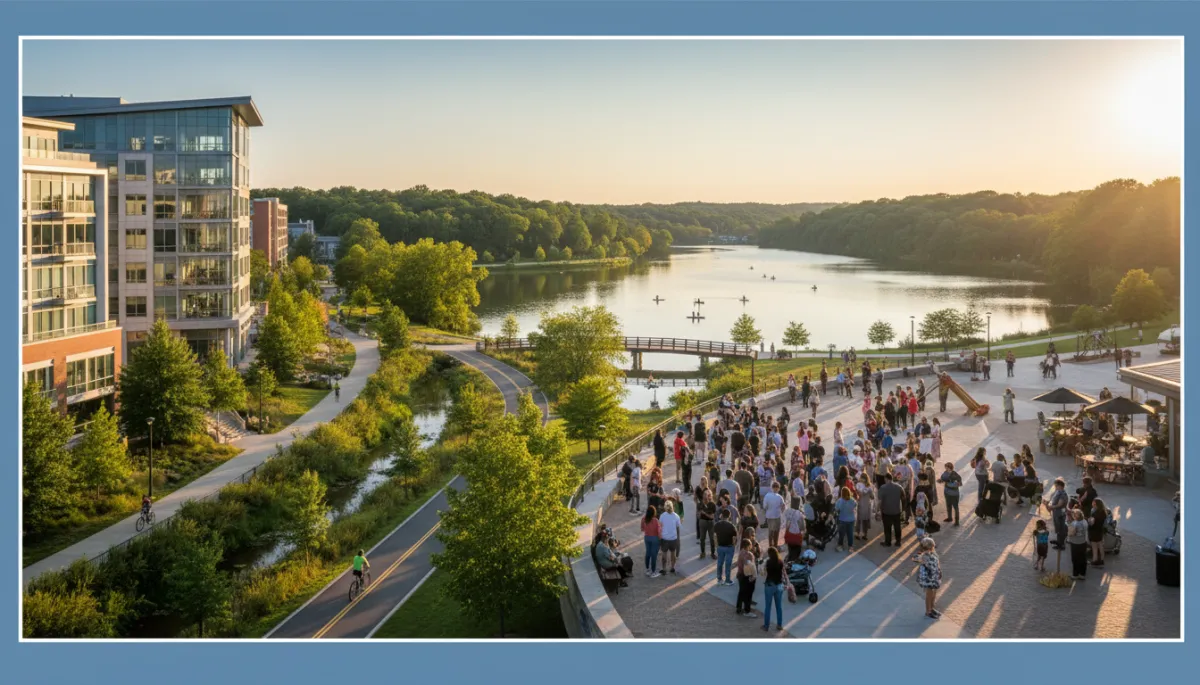
From its founding in the 1960s, Reston was designed as a master-planned community built around people, not cars. That vision still shapes daily life. The Reston Association (RA) maintains over 1,350 acres of open space, including forests, meadows, wetlands, and four lakes, alongside neighborhood pools, tennis courts, and community buildings. This intentional design is a core part of the appeal for families who value both convenience and natural surroundings.
Reston’s village centers—such as Lake Anne, South Lakes, and North Point—offer neighborhood-scale shopping, dining, and services. Reston Town Center and the evolving Reston Town Center North redevelopment add urban-style amenities: restaurants, offices, apartments, and planned civic facilities like a new Reston Regional Library and Embry Rucker Shelter (FairfaxCounty.gov). These Reston Community Features create a blend of suburban comfort and walkable, mixed-use energy that is hard to find in many traditional suburbs.
💡 Advisor Insight (The Mike Webb Team): Buyers who fall in love with Reston usually mention its thoughtful planning—plenty of trees, pathways, and parks woven between homes, shops, and schools.
Reston Outdoor Recreation and Trail System: Everyday Access to Nature
If outdoor access is high on your priority list, Reston Outdoor Recreation is a major “pro.” The Reston Association oversees more than 55 miles of paved and natural-surface trails that connect neighborhoods, schools, lakes, and village centers (Reston.org). This Reston trail system makes it realistic to walk, run, or bike without relying on busy roads, and it is a signature feature for residents who enjoy an active lifestyle.
In addition to trails, RA operates 15 seasonal outdoor pools, multiple tennis and pickleball courts, and water access on Reston’s four lakes for kayaking, paddleboarding, and fishing. Community events such as the “Play All Day VA” outdoor wellness initiative highlight the area’s commitment to health, recreation, and neighborly connection. For families, pets, and anyone who prefers to unwind outside, these amenities are an everyday benefit of Moving To Reston.

Reston’s 55-mile trail network makes everyday walking, running, and biking part of normal life.
Neighborhood Diversity and Community Culture
From the beginning, Reston was planned as an inclusive, socioeconomically and culturally diverse community. That legacy continues today in its mix of housing types, ages, and backgrounds. You will find young professionals in Metro-accessible apartments, families in townhomes and single-family houses, and long-time residents who have called Reston home for decades. Events such as the annual “Celebrate Reston!” festival at Lake Anne Plaza and the presence of arts organizations like Reston Community Players reflect a strong community identity and pride in local history (RestonMuseum.org, Wikipedia).
From a housing perspective, this neighborhood diversity means you can choose from established clusters with mid-century modern architecture, newer transit-oriented developments near the Silver Line, or quieter pockets with more traditional homes. For many families, this variety is a positive: you can often find a Reston neighborhood that fits both your lifestyle and your budget, even within a higher-cost market.
Employment Opportunities: Living Near Major Job Centers
One of the most compelling reasons people consider Moving To Reston is proximity to strong employment opportunities. Reston itself hosts major employers in technology, consulting, aerospace, and government contracting. Nearby Herndon, Sterling, and Ashburn add data centers and tech campuses, while Tysons Corner and the broader Dulles Corridor offer additional corporate headquarters and regional offices. Many residents also commute east to Arlington and Washington, D.C. for federal, legal, and professional roles.
This concentration of jobs helps support Reston’s relatively high median household income—around $148,710 (RentCafe.com)—and underpins the local housing market. For homeowners, that economic resilience can translate to stronger long-term demand and potentially more stable property values. For buyers, it is important to balance these opportunities with commuting realities and the higher Reston Cost of Living.
Reston Housing Options: Condos, Townhomes, and Single-Family Homes
When clients ask The Mike Webb Team about Reston Housing Options, we emphasize how varied the inventory can be. As of mid-2026, median home values hover in the $616,000–$654,000 range, depending on the data source (Zillow, Redfin, Realtor.com). Single-family homes often sit in the mid-$600,000s and above, while townhomes and condominiums provide somewhat more accessible entry points, especially for first-time buyers or downsizers. Condos, in particular, are expected to see increased inventory and relatively flat prices in the near term, according to regional forecasts (NVAR).
Reston’s master-planned design means many homes are part of clusters with shared green space and architectural guidelines. You will find:
Mid-century townhomes and condos near Lake Anne and older village centers
Newer, higher-density condos and apartments near Reston Town Center and Metro stations
Traditional single-family homes in tree-lined neighborhoods across South Reston and North Reston
New developments—such as proposed townhomes on Old Reston Avenue and independent living communities for seniors—continue to diversify the housing stock. For sellers, this dynamic market can be an opportunity to capture strong demand. For buyers, it underscores the value of working with a local, experienced team to navigate pricing, competition, and association structures.
Reston Cost Of Living: What to Expect in 2026 and Beyond
A candid conversation about Moving To Reston must address the Reston Cost Of Living. Overall, Reston is roughly 43–44% more expensive than the U.S. average, driven primarily by housing costs (Zillow, Salary.com). Median home values are about 102% above the national median, at approximately $616,000 (CostOfLivingData.com). For many families, this is the most significant “con” on the Reston VA Pros And Cons list.
On the rental side, expect one-bedroom apartments to range from roughly $2,300 to $2,900+ per month, with two-bedroom units commonly between $3,000 and $3,600+ (Zillow, Apartments.com, Rent.com). For a single person, total monthly costs including rent typically fall between $2,800 and $3,900+, while a family of four may see monthly budgets from $6,200 to $7,800+ (Salary.com, Wise, LivingCost.org, CityCost.org). Notably, while housing is high, categories like food, energy, and transportation can be closer to national averages, offering some balance in the overall budget.
📌 Key Takeaway: Reston offers high incomes and amenities, but housing and rent are substantially above national norms. Aligning your purchase or lease with a clear budget is essential.
Understanding Association Fees and Governance in Reston
Because Reston is a master-planned community, most properties fall under the Reston Association, and many neighborhoods also have their own cluster or condo associations. These organizations maintain shared spaces, amenities, and architectural standards—but they also come with association fees that should be factored into your monthly costs. For some buyers, this is a surprise “con” that emerges late in the process; The Mike Webb Team makes a point of addressing it early so there are no unwelcome surprises at closing.
On the positive side, these fees support the pools, trails, lakes, and open spaces that define Reston Outdoor Recreation and help protect neighborhood appearance and property values. On the downside, they add to the already-elevated Reston Cost of Living and can vary significantly from one cluster or building to another. When evaluating Reston Housing Options, it is important to review:
Reston Association annual assessments
Cluster or condo association monthly fees
What those fees cover—reserves, exterior maintenance, amenities, utilities, and insurance
Traffic, Commuting, and Daily Convenience
Traffic is another important factor on the Reston VA Pros And Cons list. While Reston’s internal street network and trail system can make local errands relatively manageable, regional commuting is a different story. The Dulles Toll Road, Fairfax County Parkway, and Reston Parkway experience significant congestion during peak hours. If your job requires a daily drive into Tysons or downtown D.C., you should plan for extended commute times and consider proximity to Metro as part of your home search criteria.
On the positive side, Reston’s three Silver Line stations offer alternatives to driving, and ongoing pedestrian improvements—such as new walkways along Sunrise Valley Drive—support safer, more convenient local travel. Many residents find that, once they are home in Reston, they can walk or bike to parks, shops, and restaurants, using their car less for local trips than in a typical suburban setting.
Weighing the Pros and Cons of Relocating to Reston, VA
Key Advantages of Moving To Reston
Planned community design: Thoughtful Reston Community Features, including village centers, open space, and amenities, create a cohesive, livable environment.
Exceptional outdoor access: A 55-mile trail system, lakes, pools, and parks make Reston Outdoor Recreation a daily reality, not just a weekend luxury.
Strong employment base: Proximity to major job centers in technology, government contracting, and professional services supports high incomes and stable demand for housing.
Diverse neighborhoods and housing types: From condos to single-family homes, Reston Housing Options can fit a range of life stages and household sizes.
Cultural and community life: Arts organizations, festivals like “Celebrate Reston!”, and upcoming amenities such as the planned Reston Arts Center contribute to a rich, engaged community culture.
Potential Challenges and Tradeoffs
High housing costs: Home prices and rents are significantly above national averages, and the Reston Cost of Living reflects that premium.
Association fees: Reston Association assessments plus cluster or condo fees can add materially to monthly costs, even when mortgage or rent is already high.
Traffic and commuting: Regional congestion, particularly on the Toll Road and major arterials, can be stressful for daily drivers, though Metro access helps some residents mitigate this.
Competitive market dynamics: Reston remains a generally seller-leaning market, with homes often selling quickly and, in some cases, above list price. Buyers should be prepared for competition and decisive offers.
Is Reston the Right Move for Your Family?
Deciding whether Moving To Reston is right for you comes down to aligning your priorities with what the community offers. If you value:
Daily access to trails, lakes, and outdoor amenities
Proximity to major employment centers in Northern Virginia and D.C.
A diverse, engaged community with a strong sense of place
A master-planned environment where amenities and green space are part of the design
…then Reston can be a highly rewarding choice. At the same time, if you are especially sensitive to housing costs, association fees, or long car commutes, those factors should be weighed carefully as you compare Reston to neighboring communities in Fairfax and Loudoun counties.
How The Mike Webb Team Helps You Move Forward with Confidence
As a trusted real estate agency serving Reston and the surrounding Northern Virginia market, The Mike Webb Team is dedicated to providing clear, experienced guidance—without pressure or jargon. Whether you are selling a home in Reston or considering relocating here, our role is to help you:
Understand current market conditions, pricing trends, and demand in your specific neighborhood or target area
Evaluate Reston Housing Options in light of your budget, commute, and lifestyle goals—including association fees and amenity access
Prepare your current home for sale to maximize value and minimize stress, using data-driven pricing and thoughtful presentation
Our promise is simple: expert guidance, clear communication, and a calm, professional approach so you can make informed decisions and move forward with confidence—whether that means settling into a lakeside townhome in Reston or choosing a different community that better fits your needs.
Next Step: If you are weighing the Reston VA Pros And Cons for your family, we invite you to connect with The Mike Webb Team for a personalized, no-pressure consultation focused on your goals, your budget, and your timeline.