Rockville vs. Bethesda: Choose Your Ideal Community
Real Estate, Rockville vs. Bethesda, Montgomery County Homebuyers' Guide
Rockville vs. Bethesda: Which Montgomery County Community Fits Your Next Move?
For prospective homebuyers in Montgomery County and the surrounding D.C. metro area, Rockville and Bethesda often rise to the top of the list. Both offer strong schools, access to Washington, D.C., and vibrant community life—but the day-to-day experience, home prices, and lifestyle can feel very different. As experienced local advisors, The Mike Webb Team has helped many families and young professionals weigh these trade‑offs so they can move forward with clarity and confidence. This guide walks you through the key differences in community, housing, schools, commute, downtown experience, outdoor recreation, shopping, dining, and overall lifestyle to help you decide which is the better fit for your priorities.
Community Identity & Neighborhood Feel
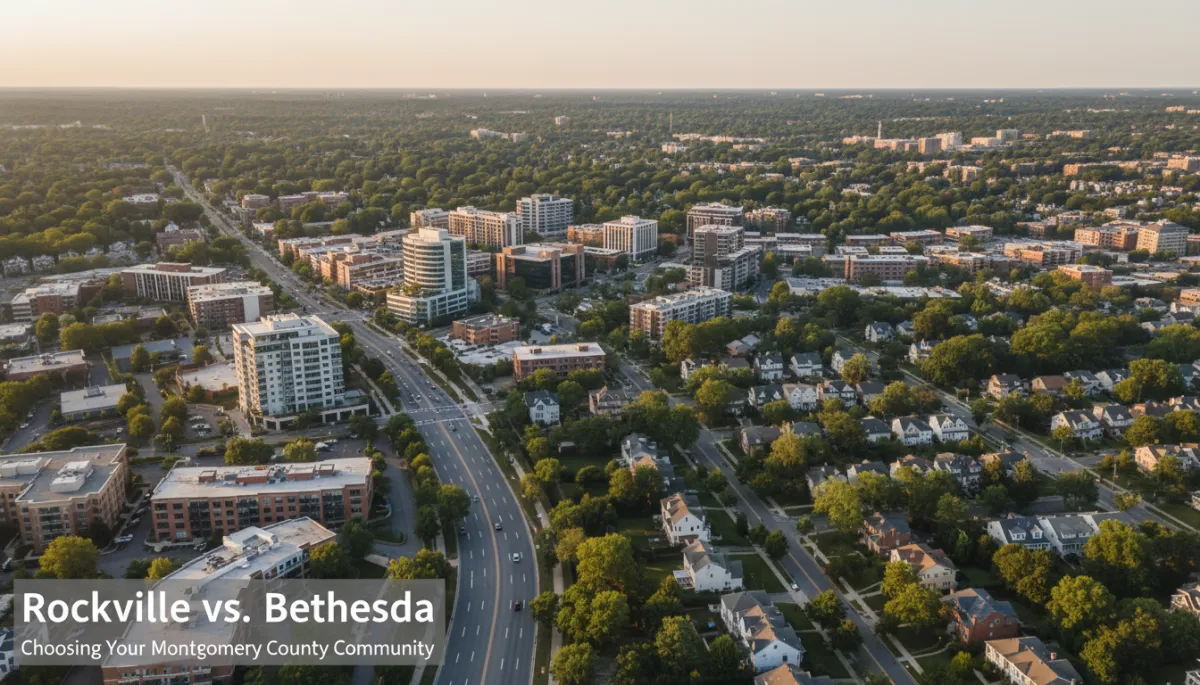
At a glance, Rockville and Bethesda share many traits: both sit along the Metro Red Line, both are part of Montgomery County, and both attract professionals who work throughout the D.C. region. Yet the communities have distinct personalities that shape your daily experience in meaningful ways.
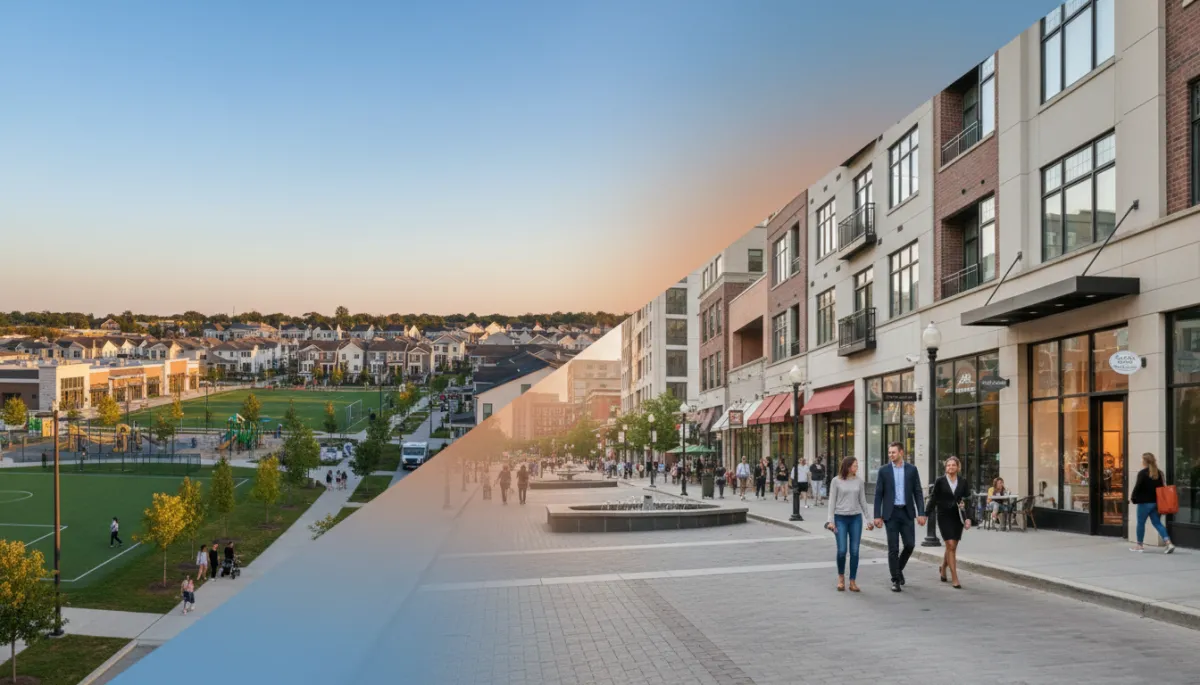
Rockville is an incorporated city with a clear civic identity and a reputation for diversity and community engagement. Rockville consistently ranks among the most diverse small cities in the U.S., with residents from many cultural backgrounds and a strong emphasis on inclusion, lifelong learning, and public participation (rockvillemd.gov). Neighborhoods range from classic mid‑century subdivisions with mature trees to newer townhome and condo developments, giving the city a comfortable, lived‑in feel that appeals to many families and first‑time buyers. Rockville’s Town Square and Pike District add a modern, walkable edge without losing that residential character.
Bethesda, by contrast, is an unincorporated but well‑known urban hub. It feels more like an upscale city neighborhood than a traditional suburb. The community is anchored by major institutions such as the National Institutes of Health (NIH) and Walter Reed National Military Medical Center, along with high‑end retail and dining. Many streets near downtown Bethesda are walkable, energetic, and densely built, while surrounding neighborhoods feature leafy, established streets with larger single‑family homes. The overall impression is polished, affluent, and fast‑paced—particularly attractive to professionals who want a vibrant, urban‑adjacent lifestyle.
📌 Key Takeaway: Rockville leans toward a diverse, community‑driven small‑city feel, while Bethesda offers a more urban, prestige‑oriented environment. Your comfort level with pace, density, and formality can be a deciding factor.
Housing, Home Prices & Space for Your Budget
For most buyers, housing and home prices are the starting point. Here, the differences between Rockville and Bethesda are significant, especially if you are balancing the desire for space with budget constraints.
Rockville: Variety and Relative Affordability
As of mid‑2026, Rockville’s housing market remains competitive but generally more attainable than Bethesda. Depending on the data source, recent median home prices in Rockville range from the low‑$600,000s to just under $700,000, with many platforms clustering around $650,000–$690,000 (Redfin, Zillow, Realtor.com). Homes often receive multiple offers and sell in roughly 23–34 days, signaling a healthy, active market.
Rockville offers a broad spectrum of housing types: garden‑style condos, townhomes, and detached single‑family homes in both established and newer communities. This variety allows buyers at different stages—first‑time purchasers, move‑up buyers, and downsizers—to find options that align with both budget and lifestyle. For families prioritizing a yard, extra bedrooms, or a home office, Rockville often delivers more square footage for the same price point compared with Bethesda (bulldogmoversmd.com).
Bethesda: Premium Pricing and Urban‑Adjacent Living
Bethesda sits at a higher price tier. Recent comparisons place its median home price around $1.1 million—roughly double Rockville’s on some measures (smover.co). The housing stock leans more heavily toward premium single‑family homes and high‑end condos, particularly near downtown and Metro stations. For buyers who want a lock‑and‑leave condo with concierge services or a stately home on a tree‑lined street within minutes of downtown D.C., Bethesda is a compelling option—but it does require a larger budget and often a willingness to compromise on lot size or interior square footage at a given price point.
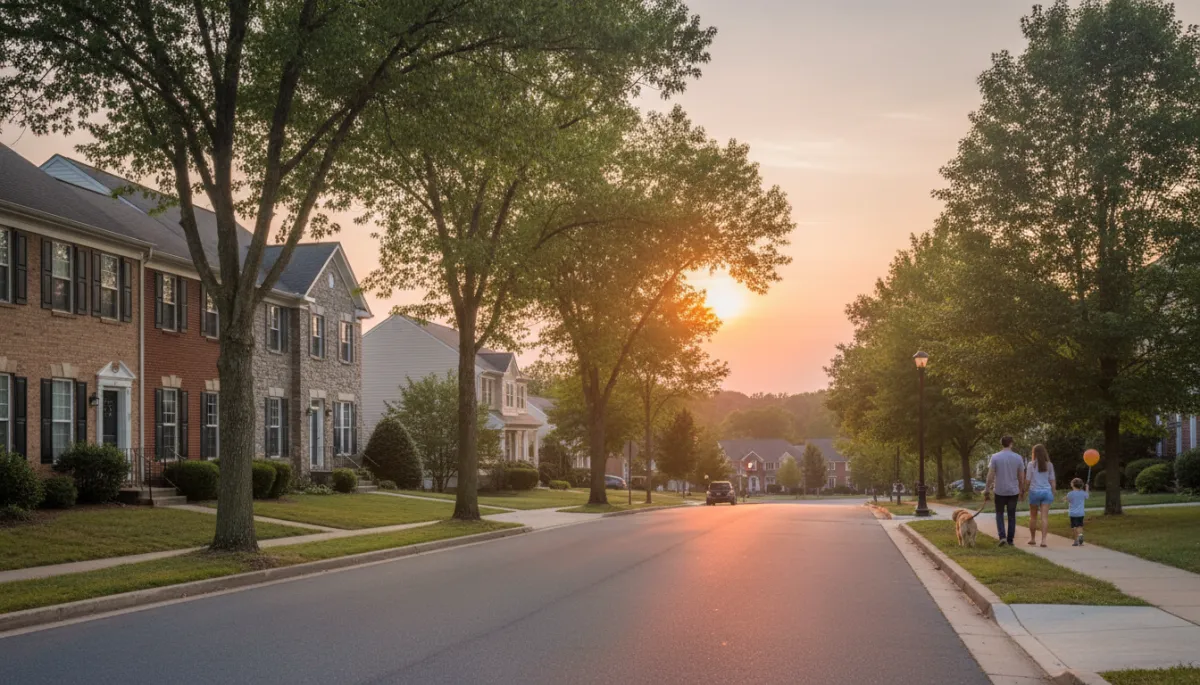
Rockville often provides more space for the budget, while Bethesda commands a premium for its urban-adjacent lifestyle.
Schools & Education: Both Strong, with Nuanced Differences
Both Rockville and Bethesda are served by Montgomery County Public Schools, one of the most respected districts in the country. For many families, school quality is a top driver in choosing between the two communities, and the differences tend to be at the margin rather than absolute.
On average, Bethesda schools post slightly higher performance metrics, with an estimated 93% pass rate compared with 85% in Rockville (smover.co). Flagship high schools such as Walt Whitman and Bethesda‑Chevy Chase are nationally recognized and can be a major draw for academically focused families. At the same time, Rockville is home to highly regarded schools of its own, including Richard Montgomery and Thomas S. Wootton, which consistently earn strong ratings and offer rigorous academic and extracurricular programs.
💡 Pro Tip from The Mike Webb Team: Instead of focusing only on city‑wide averages, look closely at the specific school pyramid for each home you are considering. In both Rockville and Bethesda, individual schools can vary, and the right fit for your child may not always be in the higher‑priced zip code.
Commute, Transit & Everyday Mobility
Commute and mobility are central considerations for many buyers, particularly young professionals and dual‑income households who need reliable access to downtown D.C., Northern Virginia, or the I‑270 corridor. Both communities are well‑served by transit, but they offer different strengths depending on where you work and how you prefer to get around.
Bethesda: Shorter D.C. Commute and Dense Transit Core
Bethesda’s central location along the Red Line offers one of the shortest Metro commutes to downtown D.C.—often around 20 minutes depending on your destination (smover.co). For professionals working in downtown D.C., Foggy Bottom, or Metro‑accessible job centers, living within walking distance of the Bethesda or Medical Center stations can dramatically simplify daily life. The dense, walkable core around these stations also makes it easy to run errands, dine out, or meet friends without getting in a car, especially if you live in a condo or townhome nearby.
Rockville: Flexibility for Drivers and Red Line Access
Rockville offers two key Red Line stations—Rockville and Shady Grove—along with excellent access to I‑270 and the Beltway. This combination is especially valuable for buyers whose jobs are spread across the region, including those in the tech and biotech corridors north of D.C. If your work takes you to multiple sites or you split time between office and remote work, Rockville’s blend of transit and highway access provides welcome flexibility (atbethesda.com).
It is also worth noting that while Bethesda’s central pockets are highly walkable, some outlying neighborhoods are more car‑dependent. Rockville, on the other hand, often places grocery stores, pharmacies, and everyday services closer to residential areas, which can reduce driving for daily errands (indexyard.com).
Downtown Experience & Lifestyle Vibe
For many buyers, the feel of the downtown or town center is where a community’s personality really comes to life. Both Rockville and Bethesda offer lively cores, but they serve different preferences when it comes to energy level and style.
Rockville Town Square & Pike District
Rockville Town Square features a European‑style pedestrian plaza lined with restaurants, shops, and seasonal events. In winter, the central area transforms into an ice‑skating rink; in warmer months, it hosts concerts, festivals, and community gatherings. The Pike District (along Rockville Pike near the Twinbrook Metro station) continues to evolve with mixed‑use developments, retail, and dining, making it increasingly attractive for buyers who want a modern, walkable environment without Bethesda‑level prices (atbethesda.com).
Downtown Bethesda: Urban Energy and Nightlife
Downtown Bethesda offers a more intense, urban experience: high‑rise office and residential buildings, a dense concentration of restaurants and bars, boutique retail, and cultural venues. Sidewalks stay active into the evening, and the area attracts professionals from across the region for dining and entertainment. If you thrive on being in the center of the action and want a lifestyle that mirrors a city neighborhood more than a suburb, downtown Bethesda is likely to resonate strongly.
Parks, Outdoor Recreation & Open Space
Access to green space is a priority for many of today’s buyers, particularly families with children and professionals who work from home and value nearby trails or parks for breaks during the day. On this front, Rockville holds a clear advantage in sheer volume of parkland and community facilities, while Bethesda still offers appealing pockets of green space.
Rockville maintains more than 1,100 acres of parks, along with multiple community centers such as the Swim & Fitness Center, Senior Center, Glenview Mansion, and the F. Scott Fitzgerald Theater (planning.maryland.gov). The city also hosts events like Rockville Science Day, Hometown Holidays, and farmers markets, which strengthen the sense of community and provide regular opportunities to get outdoors (rockvillemd.gov).
Bethesda offers walkable access to trails and parks in many neighborhoods, including connections to the Capital Crescent Trail and smaller local parks. While detailed comparative data on park acreage is limited, most analyses describe Bethesda’s park density as moderate relative to Rockville. For buyers who want immediate access to larger, city‑managed recreational facilities and a robust schedule of community events, Rockville often stands out.
Shopping, Dining & Daily Convenience
Both communities offer excellent shopping and dining, but the pattern of where those amenities sit—and how you access them—differs in ways that matter for everyday life.
Rockville: Everyday Convenience Close to Home
Analyses of local retail density show that Rockville has a higher concentration of grocery stores, pharmacies, and daily‑needs retail within short distances of residential neighborhoods (indexyard.com). That means many errands can be completed with short drives—or even on foot or bike in some pockets—making weekly routines more efficient. The diversity of the community is reflected in the restaurant scene as well, with a wide range of international cuisines alongside familiar chains and local favorites in Town Square, the Pike District, and neighborhood centers.
Bethesda: Destination Dining and Upscale Retail
Bethesda is widely known for its dining scene and boutique shopping. Downtown Bethesda, in particular, functions as a regional destination for restaurants, cafes, and nightlife. Fine dining, chef‑driven concepts, and stylish wine bars sit alongside national retailers and smaller boutiques. However, outside the core, Bethesda can be more car‑dependent for daily errands, with fewer grocery and convenience options within easy walking distance from strictly residential streets (indexyard.com).
Suitability for Families vs. Young Professionals
One of the most frequent questions we hear at The Mike Webb Team is, “Which community is better for families?” followed closely by, “Where will I fit in as a young professional?” The truth is that both Rockville and Bethesda can work beautifully for either group—but for different reasons.
Families: Space, Schools, and Community Support
For many families, Rockville’s combination of relatively more affordable home prices, larger lots, and abundant parks makes it highly attractive. The city’s community‑oriented events, recreation programs, and diverse population create a welcoming environment for children and parents alike. Families who want a strong sense of neighborhood, room to grow, and access to quality schools without stretching to Bethesda‑level prices often find Rockville to be a balanced choice.
Bethesda, meanwhile, draws families who prioritize top‑tier school performance metrics and proximity to downtown D.C. or major medical and research institutions. For households where commute time is critical or where specific Bethesda high schools are a must, paying a premium for a smaller home or lot can still feel like the right decision. The key is understanding exactly what you are gaining—and what you may be giving up—in terms of space and budget.
Young Professionals: Walkability, Nightlife, and Flexibility
Young professionals often gravitate toward areas where they can walk to restaurants, gyms, and transit. Downtown Bethesda and its immediate surroundings are especially appealing in this respect: you can live in a condo or apartment, walk to Metro, and have a wide range of dining and nightlife options at your doorstep. For those whose careers are centered in D.C. or at nearby institutions, this lifestyle can be ideal—if the budget allows.
Rockville also serves young professionals well, particularly those who value a mix of walkability and space. The Pike District and Rockville Town Square offer a more budget‑friendly alternative to downtown Bethesda, with growing numbers of apartments, condos, and townhomes near shops and transit. For professionals who foresee starting a family in the next few years, Rockville can be a strategic choice that balances current lifestyle with future needs.
Choosing the Best Community for You: Space, Walkability, Commute & Lifestyle
Ultimately, deciding between Rockville and Bethesda comes down to your priorities. As advisors focused on helping families move forward with less stress, The Mike Webb Team often guides clients through a simple framework built around four key dimensions: space, walkability, commute, and overall lifestyle.
Space: If you want a larger home, yard, or room for multi‑generational living within a defined budget, Rockville generally stretches your dollars further. If you are comfortable with a smaller footprint in exchange for a prime Bethesda location, that premium may be worthwhile for you.
Walkability: For a truly urban, walk‑everywhere lifestyle, downtown Bethesda is hard to beat. For a more balanced approach—where you can walk or take short drives to many amenities while still enjoying a quieter residential street—Rockville’s Town Square and Pike District neighborhoods are strong contenders.
Commute: If you work in central D.C. and rely heavily on Metro, a home within walking distance of a Bethesda station may save you meaningful time each day. If your job is more dispersed across the region—or you frequently use I‑270—Rockville’s combination of Metro and highway access can be more practical.
Lifestyle & Community Feel: Ask yourself whether you are drawn to the energy and prestige of an urban hub or the inclusive, community‑oriented character of a diverse small city. Visit both communities at different times of day, attend a local event, and picture your daily and weekly routines there.
📌 Key Takeaway: There is no single “better” choice—only the community that best supports your family’s goals, budget, and preferred way of living. A clear, side‑by‑side comparison aligned with your priorities is the most effective way to decide.
How The Mike Webb Team Helps You Decide with Confidence
For homeowners considering selling in Montgomery County and planning their next purchase—whether in Rockville, Bethesda, or a neighboring community—the decision is about more than just a new address. It is about aligning your home with the next chapter of your life, maximizing your current home’s value, and making the transition with as little stress as possible.
The Mike Webb Team brings a warm, professional, and straightforward approach to this process. The team starts by clarifying your priorities—space, walkability, commute, schools, and lifestyle—then provides clear, data‑driven guidance on how Rockville and Bethesda compare for your specific situation. From preparing your current home for sale to negotiating your purchase in a competitive market, the focus is on giving you confidence and clarity at every step, without aggressive sales tactics or unnecessary pressure.
Whether you ultimately choose Rockville’s diverse, community‑focused environment or Bethesda’s urban‑adjacent, premium lifestyle, having an experienced advisor by your side can make the transition smoother and more rewarding. If you are a prospective homebuyer in Montgomery County or the surrounding areas and would like a personalized comparison based on your budget and goals, The Mike Webb Team is here to help you move forward with clarity and confidence.