
Tysons vs Arlington vs McLean: 2026 Living Guide
Real Estate, Cost of Living, Northern Virginia, Tysons, Arlington, McLean
Tysons vs. Arlington vs. McLean: 2026 Cost of Living and Lifestyle Guide for Northern Virginia Buyers
Choosing between Tysons, Arlington, and McLean in 2026 is about more than zip codes and commute times. It is a careful balance of housing costs, transportation, daily lifestyle, and long‑term plans. This guide breaks down what buyers can expect in each community—and how ***The Mike Webb Team*** helps clients find the right fit with clarity and confidence.
The Big Picture: How These Three Markets Compare in 2026
Tysons, Arlington, and McLean sit within a few miles of each other, yet their cost of living and character feel very different. All three are considered high‑cost markets by national standards, but they occupy distinct tiers when it comes to housing and everyday expenses:
Tysons: High cost, but relatively more attainable than Arlington and McLean, especially for condo buyers. Cost‑of‑living index estimates range from 100–166 (U.S. average = 100), with housing as the main driver (uscostofliving.com).
Arlington: Roughly 43% above the national average overall, with a strong, competitive housing market and monthly costs for a single person around $3,543 and for a family of four near $7,803 (salary.com).
McLean: The most expensive of the three, with cost‑of‑living indices between 228 and 359, driven primarily by elite‑tier housing (areavibes.com).
For ***The Mike Webb Team***, the starting point with any buyer is simple: align the numbers with the lifestyle. Understanding what each community offers—and what it realistically costs per month—helps clients move forward without surprises or second‑guessing.
Housing Costs: Where Your Housing Dollar Goes Furthest
Tysons: Condo‑Friendly and Income‑Aligned Pricing
Tysons has transformed into a vertical, transit‑oriented hub, and its housing market reflects that shift. Most typical homes—especially condos—fall between $475,000 and $650,000, with luxury properties stretching much higher. Median home values reported around $640,500 sit well above the national median but below nearby Arlington and McLean (uscostofliving.com).
Median monthly rent in Tysons—roughly $2,106 to $2,478 for a one‑bedroom—equates to about 20–23% of the area’s median household income of $129,189, staying under the 30% affordability benchmark often recommended by financial planners. For many young professionals and dual‑income couples, that ratio is appealing: they can live near the Metro and major employers without stretching every dollar toward housing.
Arlington: Strong Prices and Competitive Inventory
Arlington’s housing market remains one of the most sought‑after in Northern Virginia. Median sale prices typically range from $800,000 to $925,000, depending on the source and property type (Redfin, Realtor.com). Condos and townhomes bring the entry point down, but single‑family homes near Metro or in popular neighborhoods can push well into seven figures.
Typical rents for a one‑bedroom near Metro run above $2,000 per month, with larger units and townhomes commanding significantly more. For many buyers, Arlington offers a compelling mix of urban access and neighborhood feel, but the price of admission is notably higher than in Tysons, especially for families seeking more space.
McLean: Elite‑Tier Pricing and Estate‑Style Living
McLean stands in its own category. Median home values generally fall between $1.4 million and $1.8 million, with some neighborhoods seeing median sales closer to $1.75–$1.85 million (Zillow, Houzeo). These prices reflect large lots, luxury finishes, and proximity to both Tysons and Washington, D.C.
Median rents around $3,376 per month and monthly living estimates for single professionals ranging from roughly $2,977 to $5,850 underscore that McLean is designed for high‑income households. For many downsizers coming from larger suburban homes elsewhere, McLean can feel familiar in scale but elevated in price and prestige.
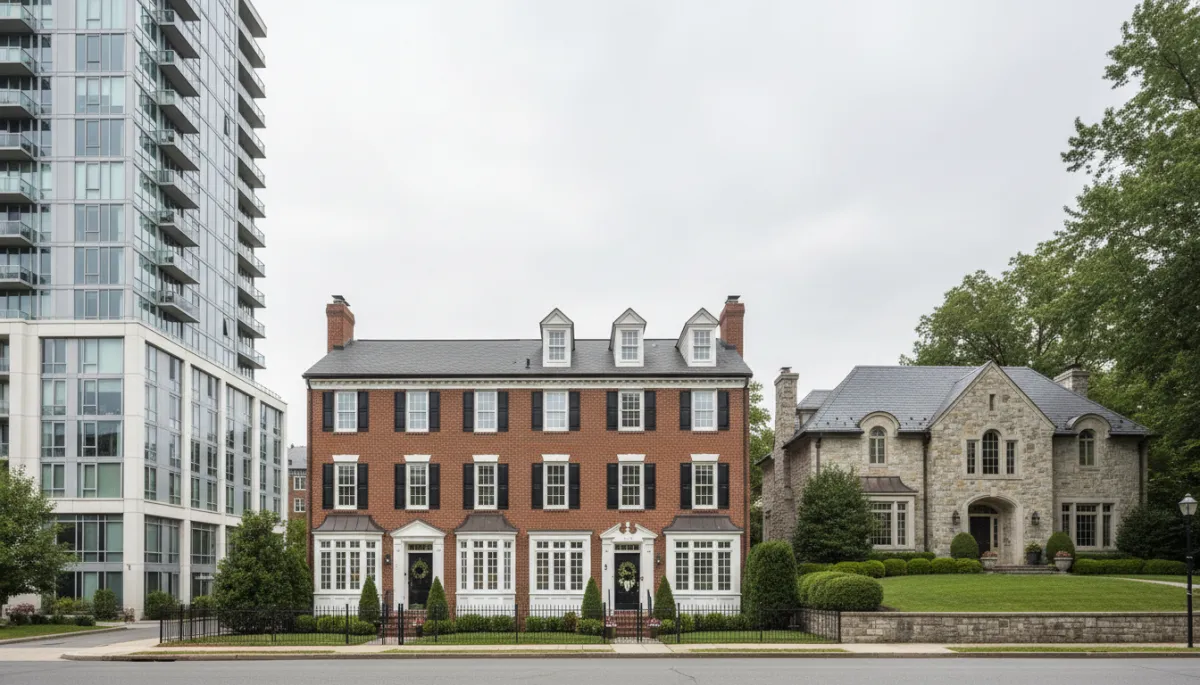
Housing styles range from Tysons condos to McLean estates, and prices follow suit.
Transportation: Commutes, Connectivity, and Car Dependence
Tysons: Growing Transit Hub with Urbanizing Streets
Tysons is anchored by the Silver Line Metrorail, with multiple stations connecting residents directly to Reston, Dulles International Airport, Arlington, and downtown D.C. Metrobus and Fairfax Connector routes layer in additional options, while major highways such as I‑495 and Route 123 support drivers commuting across the region. As Fairfax County continues to invest in walkability and bike infrastructure, Tysons is gradually shifting from a car‑centric office park to a more balanced, mixed‑use environment.
Arlington: Metro‑Rich and Walkable by Design
Arlington’s Rosslyn‑Ballston and Pentagon‑Crystal City corridors are among the most transit‑rich areas in the region. Multiple Metro lines, extensive bus networks, bike lanes, and pedestrian‑focused planning mean many residents can realistically live without a car. Arlington’s Transportation Master Plan continues to prioritize safer biking and walking connections, which can reduce transportation costs over time and support a more urban lifestyle.
McLean: Car‑Oriented with Strategic Access
McLean offers quick access to the Capital Beltway (I‑495), George Washington Parkway, and Route 123, making it convenient for drivers heading into D.C., Tysons, or other parts of Fairfax County. While the Silver Line runs nearby, many McLean neighborhoods are not within easy walking distance of Metro, so households often rely on one or more vehicles. For buyers, this means factoring in higher transportation costs—car payments, insurance, fuel, and parking—alongside already premium housing expenses.
💡 Expert Insight from The Mike Webb Team: When your commute and daily driving patterns are clear, the right location often reveals itself. A slightly higher mortgage in a more transit‑rich area can sometimes be offset by lower transportation costs and time saved.
Lifestyle Differences: How Each Community Feels Day to Day
Tysons: Modern, Vertical, and Retail‑Forward
Tysons is defined by its skyline, shopping, and rapid growth. High‑rise condos, luxury apartments, and mixed‑use developments cluster around Tysons Corner Center and Tysons Galleria. Residents enjoy walkable access to restaurants, national retailers, gyms, and entertainment. Parks and trails are improving, but the overall feel remains modern and urban‑suburban—a strong match for young professionals who want convenience and newer construction without living directly in D.C.
Arlington: Urban Energy with Neighborhood Charm
Arlington blends the energy of city life with the comfort of established neighborhoods. Areas like Clarendon, Ballston, and Pentagon City offer dense, walkable streets with cafes, local shops, nightlife, and quick Metro access. Just a few blocks away, tree‑lined streets with single‑family homes and parks create a quieter, family‑friendly environment. For many buyers, Arlington strikes a rare balance: vibrant amenities, short commutes, and a strong sense of community.
McLean: Quiet, Upscale, and Privacy‑Oriented
McLean offers a quieter, more secluded lifestyle. Large lots, mature trees, and estate‑style homes are common, and the overall pace tends to be slower than in Tysons or Arlington. High‑end shopping and dining are easily accessible in nearby Tysons, but many McLean neighborhoods themselves feel distinctly residential. This appeals to established families, executives, and downsizers who value privacy, space, and a more traditional suburban feel—provided the budget supports it.

Different lifestyles emerge clearly on the ground, even within a few miles’ radius.
Common Buyer Scenarios: Who Fits Where—and Why
Young Professionals: Balancing Commute, Nightlife, and Budget
Many young professionals working in Tysons, Arlington, or downtown D.C. are drawn to transit‑oriented living and walkable amenities. For this group, housing costs and lifestyle fit are tightly linked:
Tysons: Attractive for those employed nearby who want a newer condo, a short commute, and quick access to shopping and dining. The rent‑to‑income ratio often works well for high‑earning professionals, especially in tech, consulting, or finance.
Arlington: Ideal for professionals who split time between D.C. and Northern Virginia, or who value nightlife and a strong restaurant scene. The tradeoff is higher purchase prices and, in some cases, smaller square footage for the same budget compared with Tysons.
***The Mike Webb Team*** frequently helps first‑time buyers weigh whether paying more for Arlington’s walkability and urban energy is worth it versus choosing a slightly lower‑priced condo in Tysons with similar commute times but a different feel. The right answer depends on how often they go into D.C., how much they value nightlife, and how aggressively they want to save or invest beyond housing.
Families: Space, Schools, and Long‑Term Stability
For families, the decision often centers on bedroom count, school options, and access to parks. Monthly budget ranges widen significantly—from around $7,000 in some Arlington scenarios to $11,000 or more in McLean, according to several cost‑of‑living models. Within that range, each community offers distinct tradeoffs:
Tysons: Works well for families comfortable with condo or townhome living who want to be near major employers and shopping. Newer buildings often provide on‑site amenities like gyms, pools, and shared outdoor spaces, though private yards may be limited.
Arlington: Appeals to families seeking a blend of walkability, strong schools, and neighborhood parks. Many are willing to accept a smaller home or older property to stay within budget and remain close to the Metro, activities, and community events.
McLean: Often the choice for households who prioritize larger lots, privacy, and a quieter environment—and who can comfortably manage the higher mortgage or purchase price. For relocating executives or move‑up buyers, McLean can feel like a long‑term destination rather than a stepping stone.
Downsizers: Trading Space for Simplicity—or Elevating Lifestyle
Downsizers—often empty nesters or retirees—approach the decision from a different angle. They may be selling a larger home and unlocking substantial equity, but they also want to reduce maintenance, simplify daily life, and stay connected to family and healthcare providers. The communities offer distinct paths:
Tysons: High‑rise condos with concierge services and secure parking can be very appealing. Proximity to shopping, dining, and medical offices adds convenience, while Metro access supports car‑light living.
Arlington: Attracts downsizers who want to remain socially active—near theaters, restaurants, and cultural events—while still being close to adult children in the region. Smaller single‑family homes or townhomes in walkable neighborhoods are particularly desirable.
McLean: Appeals to those who want to maintain a high level of privacy and space, perhaps moving from a very large property to a slightly smaller but still upscale home, often mortgage‑free after selling elsewhere.

Side‑by‑side cost and lifestyle comparisons give buyers clarity before they commit.
Unique Features and Tradeoffs of Each Community
Tysons: Newer Builds, Vertical Living, and Long‑Term Growth
Unique features: Modern high‑rise living, major shopping centers, Silver Line access, and ongoing redevelopment projects that continue to add restaurants, parks, and cultural amenities. Many buildings offer contemporary finishes and energy‑efficient systems that appeal to buyers who prefer “move‑in ready” over renovation projects.
Tradeoffs: Fewer traditional single‑family neighborhoods within walking distance of Metro, a still‑evolving sense of community compared with older neighborhoods, and traffic congestion around major shopping and office corridors. Buyers must be comfortable with a more urban, vertical lifestyle and the possibility of nearby construction as the area continues to grow.
Arlington: Established Neighborhoods and Transit‑First Planning
Unique features: Mature neighborhoods, extensive transit options, and a strong track record of walkable, mixed‑use planning. Arlington’s blend of condos, townhomes, and single‑family homes provides a range of options for different stages of life, all with relatively close‑in access to D.C. and the Pentagon. Cultural events, community programming, and local businesses contribute to a strong sense of place.
Trade-offs: Higher housing prices, especially for detached homes, and competitive bidding in desirable school zones or near the Metro. Buyers may need to accept older properties, smaller yards, or less interior space to stay on budget. Renovation costs should be factored into long‑term planning where applicable.
McLean: Space, Prestige, and Privacy—at a Premium
Unique features: Large lots, estate‑style homes, and a reputation as one of Northern Virginia’s most prestigious addresses. Many properties offer expansive outdoor space, high‑end finishes, and custom architecture. Proximity to Tysons and D.C. means residents can access top‑tier shopping and employment hubs while enjoying a quieter home environment.
Tradeoffs: Significantly higher purchase prices and, for many, a more car‑dependent lifestyle. Monthly budgets must account not only for a larger mortgage or property tax bill but also for ongoing maintenance of bigger homes and grounds. For some buyers, the prestige and space are worth it; for others, those same funds may feel better invested elsewhere.

A clear view of neighboring communities helps buyers see how close—and different—they really are.
How Housing Costs Shape Decisions—and Why Lifestyle Fit Matters Just as Much
Across Tysons, Arlington, and McLean, housing is the single largest line item in most household budgets. Whether it is a $2,400 monthly rent in Tysons, an $800,000 purchase in Arlington, or a $1.6 million home in McLean, those figures influence everything from savings rates to travel plans and retirement timelines. Yet focusing on price alone can lead buyers into homes and neighborhoods that do not truly support how they live day to day.
***The Mike Webb Team*** encourages clients to think in terms of total lifestyle cost, not just mortgage or rent. That means looking at:
Commute time and transportation expenses (Metro vs. car payments, tolls, and parking)
Childcare, school‑related costs, and extracurricular activities
Dining, entertainment, and membership fees that naturally come with certain lifestyles
Home maintenance, utilities, and renovation or upgrade plans
A buyer might save several hundred dollars per month by choosing Tysons over Arlington, only to spend that difference on additional car costs or frequent rideshares if the location does not align with their routine. Conversely, paying more for an Arlington condo within walking distance of work and amenities may reduce transportation expenses and add valuable hours back into each week. In McLean, buyers must be honest about whether they will use and enjoy the extra space they are paying for—or whether a slightly smaller, more central home might better support their priorities.
The Role of The Mike Webb Team: Clear Guidance in a Complex Market
For many buyers and sellers, comparing Tysons, Arlington, and McLean can feel overwhelming. Each market moves at its own pace, with different price points, property types, and micro‑neighborhoods to understand. ***The Mike Webb Team's*** role is to simplify that complexity and provide confident, trustworthy guidance grounded in current data and real‑world experience.
Working with homeowners and families across Northern Virginia, Mike and Claudia:
Prepare side‑by‑side cost‑of‑living and housing comparisons tailored to each client’s income, commute, and lifestyle goals
Highlight realistic monthly budget ranges for young professionals, families, and downsizers in each community, using up‑to‑date 2026 data from sources such as salary.com, Redfin, and Zillow.w
Walk clients through tradeoffs in space, commute, and amenities—without pressure or aggressive sales tactics—so they can decide what truly matters most
Support sellers in positioning their homes effectively, whether they are moving from McLean to a condo in Tysons or from Arlington to a larger property further out, always with an eye on maximizing value and reducing stress
Above all, ***The Mike Webb Team*** understands that a home purchase or sale is rarely just a financial decision. It is about families moving forward—into new jobs, new school districts, new chapters. By combining clear market insight with a warm, conversational approach, Mike and Claudia help clients feel prepared, not pressured, every step of the way.
Choosing Your Best‑Fit Community in 2026
Tysons, Arlington, and McLean each offer compelling reasons to call them home. Tysons provides modern, transit‑connected living with relatively more attainable pricing. Arlington delivers a refined balance of urban energy and neighborhood charm at a premium. McLean offers space, privacy, and prestige for those whose budgets and priorities align with its elite‑tier market.
The right choice depends on who you are—a young professional planning the next five years, a growing family looking for stability, or a downsizer ready for a simpler, more convenient lifestyle—and how you want your days to feel. Housing costs will shape what is possible. Lifestyle fit will determine whether it feels right.
If you are considering a move into or out of Tysons, Arlington, or McLean, ***The Mike Webb Team*** is ready to walk through the numbers, neighborhoods, and nuances with you—so you can sell or buy with confidence, clarity, and less stress, and move into your next chapter fully prepared.