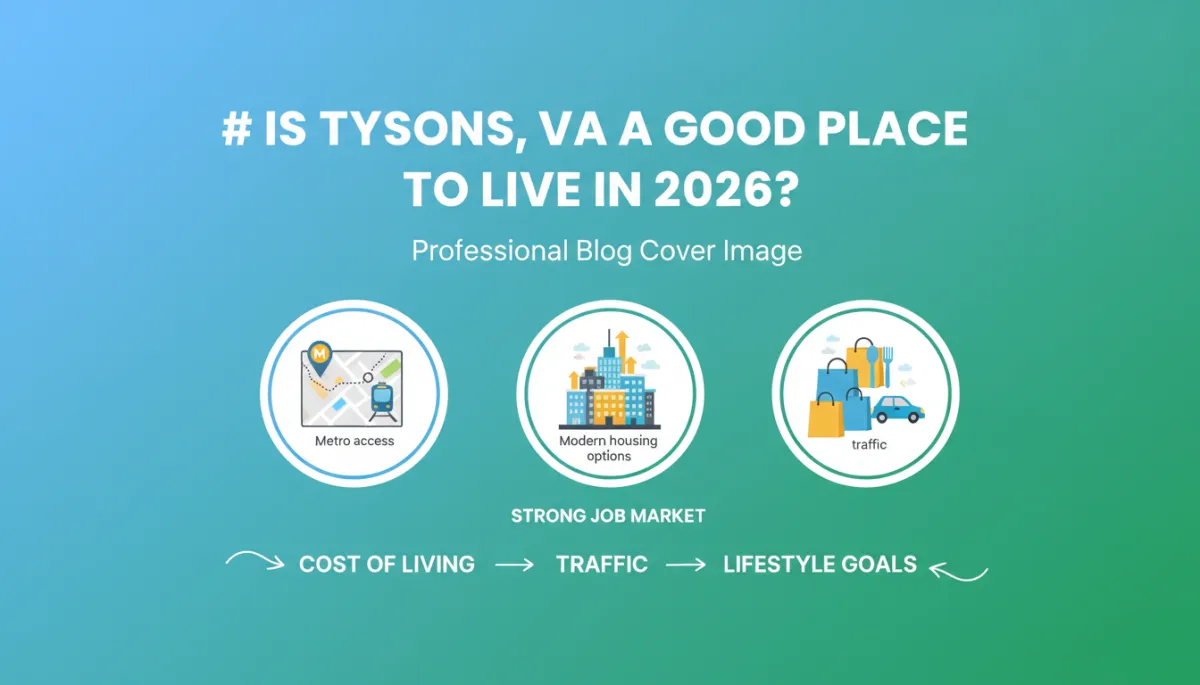
Is Tysons, VA Ideal for Living in 2026?
Real Estate, Tysons VA Living, Relocation Guide 2026
Is Tysons, VA a Good Place to Live in 2026?
As Tysons continues its transformation from a suburban business district into a true live‑work‑play hub, many families and homeowners are asking whether it is a smart place to call home in 2026. The Mike Webb Team has taken a close, data‑driven look at Tysons to help you decide if it aligns with your budget and lifestyle goals.
Strategic Location and Metro Access
Tysons sits in a prime location in Fairfax County, roughly halfway between Washington, D.C. and Dulles International Airport. For many professionals, that means shorter regional commutes and easier access to both national and international travel. Four Silver Line stations—McLean, Tysons, Greensboro, and Spring Hill—provide direct Metro access to downtown D.C., Reston, and the airport corridor, a major advantage over many Northern Virginia suburbs that still rely heavily on driving.
For homeowners thinking about resale value, proximity to rail has become a key differentiator. Properties within an easy walk to Metro often command a premium and attract buyers who prioritize convenience and car‑optional living—an important consideration if you plan to sell in a few years and want to protect your investment.
A Strong Job Market Close to Home
One of Tysons’ biggest draws in 2026 is its strong job market. With more than 120,000 employees and major employers such as Capital One, Freddie Mac, Northrop Grumman, Booz Allen Hamilton, Hilton, and MITRE, Tysons remains one of the D.C. region’s most important employment centers (Tysons Community Alliance, 2026). Office visitation has climbed about 10% year‑over‑year, and high‑quality “trophy” office space continues to lease at healthy rates, signaling ongoing corporate confidence in the area.
For residents, this concentration of employers means a realistic chance to live close to work, reduce commute times, and enjoy a more balanced daily rhythm. It also helps support long‑term housing demand—good news for homeowners focused on preserving and growing equity over time.

Tysons’ job base and transit access help support long‑term housing demand and stability.
Shopping, Dining, and Everyday Convenience
Tysons has long been known for its exceptional shopping and dining scene, anchored by Tysons Corner Center and Tysons Galleria. Recent investments—such as a $100 million makeover at Tysons Corner Center and the addition of experience‑focused venues like Dick’s House of Sport—have pushed the area further toward an all‑day destination rather than simply a mall stop (Axios, 2025).
Residents enjoy everything from chef‑driven restaurants and upscale boutiques to everyday essentials, fitness studios, and entertainment venues within a short drive—or even a walk, depending on where you live. For busy families, this level of convenience can dramatically simplify weeknights and weekends, supporting lifestyle goals that prioritize time together over time in the car.
Modern Housing Options in a Growing Urban Center
If you picture Tysons as primarily office towers and parking lots, 2026 may surprise you. The area now offers a wide range of modern housing options, from high‑rise condos and luxury apartments to townhomes and single‑family homes in nearby neighborhoods. Median listing prices hover around $549,000, with condos often in the $425,000–$850,000 range and townhomes and detached homes climbing from the high $900,000s into the $1.5M+ bracket (Realtor.com, BrightMLS 2026).
New developments such as The Flats at Tysons and The Boro’s next phase are adding walkable, amenity‑rich communities steps from transit, retail, and offices. Indigo at McLean Station is expanding income‑restricted rental options near Metro, offering a rare affordability component in a high‑cost area. For sellers, this ongoing investment helps keep Tysons relevant and competitive; for buyers, it means more choices in building age, layout, and price point.
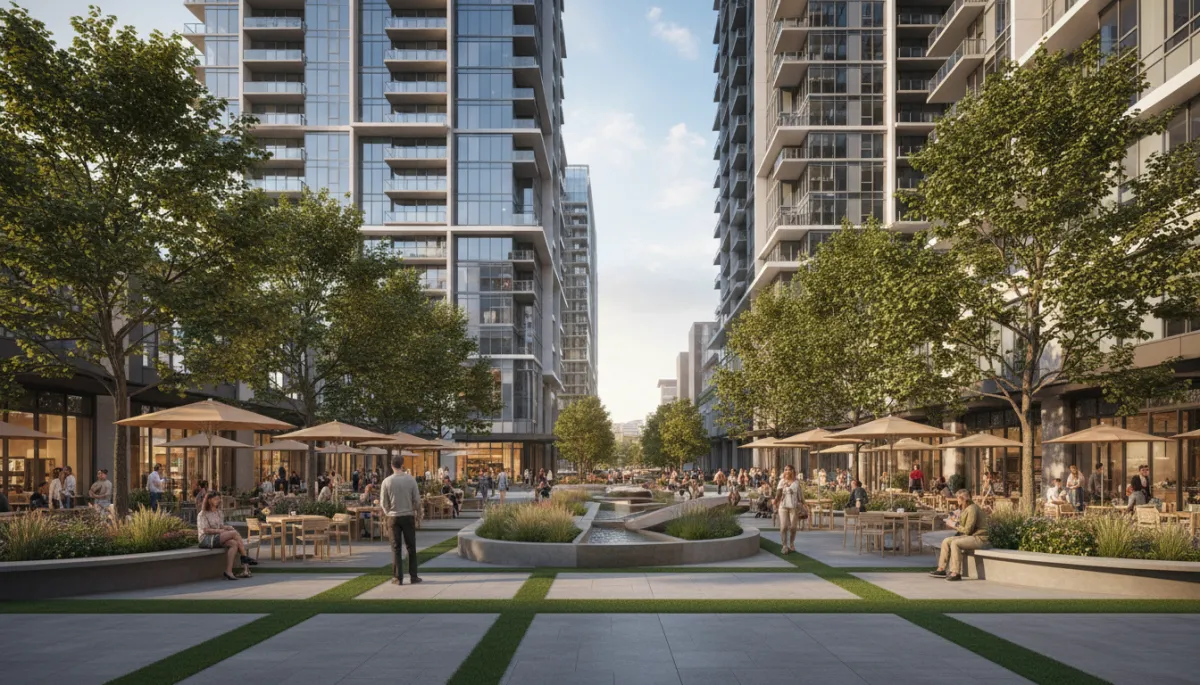
New mixed‑use communities in Tysons blend modern homes with everyday walkable amenities.
Traffic, Cost of Living, and Trade‑Offs to Weigh
No honest assessment of Tysons would ignore traffic. Despite major road improvements, this is still a busy regional crossroads. Rush‑hour backups on the Beltway and Route 7 remain part of daily life for many drivers. Living close to Metro or within walking distance of work can significantly reduce the stress of congestion, but if your routine depends on driving at peak times, it is important to factor that into your quality‑of‑life equation.
The other major consideration is the cost of living. Tysons scores around 166 on the national cost‑of‑living index—about 66% above the U.S. average and well above the Virginia average. Median household income is roughly $129,000, but average rents in the $2,800–$3,300 range and a median home value around $640,500 mean housing will be a significant line item for most households (USCostOfLiving.com, RentCafe, 2026). Groceries and utilities run about 6% above national norms, adding to ongoing monthly expenses.
Matching Tysons to Your Lifestyle Goals
Ultimately, whether Tysons is a “good” place to live in 2026 comes down to your lifestyle goals, budget, and stage of life. If you value urban energy, short commutes to a strong job market, robust shopping and dining options, and modern housing options with amenities like fitness centers, rooftop spaces, and concierge services, Tysons offers a compelling package.
On the other hand, if your priorities center on a quieter, more traditional suburban feel with lower housing costs and less congestion, neighboring areas may be a better fit. Many of our clients choose a hybrid approach—living just outside Tysons in slightly more residential neighborhoods while still taking advantage of its employment base and amenities.
💡 From The Mike Webb Team: Our role is to help you weigh these trade‑offs clearly—location, Metro access, traffic patterns, and cost of living—so you can move forward with confidence, whether that means selling in Tysons, buying here, or exploring nearby communities that better match your long‑term plans.
If you are considering a move in or out of Tysons in 2026, The Mike Webb Team is here to provide clear, trustworthy guidance on pricing, preparation, and timing, so you can maximize your home’s value and reduce stress as you take your next step.