Sep 25, 2026 · 5 min read · Northern Virginia
Virginia Divorce: Navigating Your Marital Home

For many Virginia couples, the house is their biggest asset and the place that feels most like “home.” When a marriage ends, deciding what happens to the house can be one of the most emotional and complicated parts of the divorce process. Understanding how Virginia law treats the marital home can help you make clearer, more confident decisions.
Marital vs. Separate Property: How the Law Sees Your House
In Virginia, property is divided under an equitable distribution system. That means the court aims for a division that is fair, not necessarily a 50/50 split. The first step is deciding whether the house is:
Marital property – generally, a home bought during the marriage with marital funds, regardless of whose name is on the deed or mortgage.
Separate property – usually, a home owned by one spouse before marriage or received as a gift or inheritance, and kept financially separate.
Hybrid property – a mix of both, such as a house one spouse owned before marriage but that both contributed to during the marriage (for example, by paying the mortgage or funding renovations).
When a house is hybrid, the court can separate out the separate portion and the marital portion, then divide only the marital share between spouses.
Who Gets to Stay in the House?
There is no automatic rule that one spouse “gets” the house in a Virginia divorce. Instead, the court looks at several factors, including:
Each spouse’s financial situation and ability to afford the mortgage, taxes, insurance, and maintenance.
Whether minor children are involved and whether remaining in the home would support their stability and best interests.
How other assets and debts are being divided, and whether awarding the house to one spouse helps create an overall fair outcome.
💡 Pro Tip: Even if you are allowed to stay in the house, your lender does not have to remove your spouse from the mortgage. Refinancing is often necessary to truly take over the home on your own.
Common Outcomes for the House in a Virginia Divorce
What actually happens to the house will depend on your agreement with your spouse or, if you cannot agree, on the judge’s decision. Some of the most common outcomes include:
One Spouse Buys Out the Other
If one spouse wants to keep the home, they may buy out the other’s share of the equity. This often involves:
Agreeing on the home’s value (through an appraisal or market analysis).
Calculating the equity and each spouse’s share based on the equitable distribution.
Refinancing the mortgage into the staying spouse’s name alone, if required by the lender.
Selling the House and Splitting the Proceeds
When neither spouse can afford to keep the house, or when emotions are too high, selling can be the cleanest option. The home is listed, sold, and the net proceeds (after paying off the mortgage, closing costs, and agreed repairs) are divided as part of the overall property settlement.
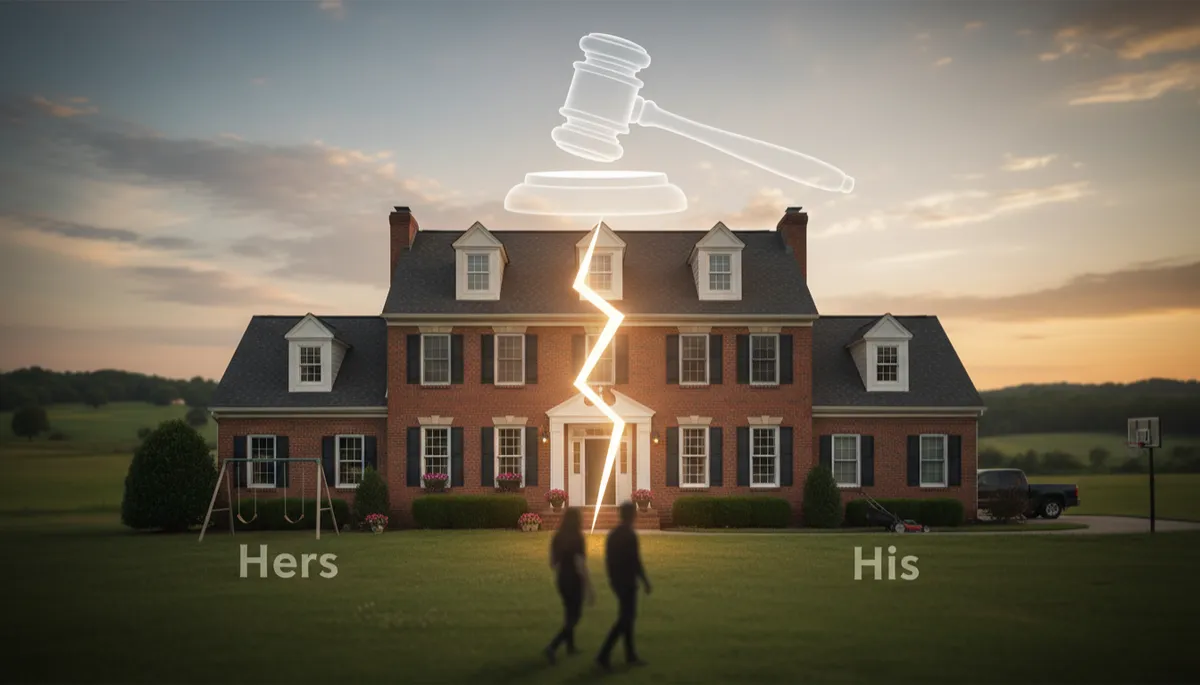
Coordinating with legal and real estate professionals can protect both spouses’ interests.
Delayed Sale or Co-Ownership After Divorce
In some cases, spouses agree to keep the home for a period of time after the divorce. This might happen when children are close to finishing school or when the market is unfavorable for selling. A detailed written agreement should cover:
Who lives in the home and for how long.
How mortgage payments, taxes, insurance, and repairs will be shared.
What will trigger the sale (for example, a child graduating, a remarriage, or a specific date).
⚠️ Warning: Remaining co-owners after divorce can work, but only with a clear, written plan. Without one, you may face future disputes or credit problems if payments are missed.
How Courts Decide What’s “Fair” for the House
When spouses cannot reach an agreement, a Virginia judge will decide what happens to the house as part of the overall property division. The court considers many factors, including the length of the marriage, each spouse’s contributions (financial and non-financial), each party’s earning capacity, and any circumstances that affected the marriage, such as economic misconduct or waste of assets.
The result might be an order to sell the home, award it to one spouse with an offset in other property, or, in limited situations, allow continued joint ownership for a time. The key is that the outcome must fit into a broader, equitable division of everything you own and owe.
Final Thoughts: Protecting Yourself and Your Home
What happens to the house during a divorce in Virginia is rarely simple, but you do have options. Whether you hope to stay, prefer to sell, or are unsure what you can realistically afford, it is wise to speak with a Virginia family law attorney and, often, a trusted real estate professional. With the right guidance, you can approach this major decision with a clearer understanding of your rights, your risks, and your long-term financial picture.