Jul 30, 2026 · 11 min read · Fort Washington
Fort Washington vs. Northern VA: Home Buying Guide

If you are comparing Fort Washington Homes with options in Northern Virginia Real Estate, you are likely weighing more than just price. Commute time, lifestyle, schools, and community amenities all play a role. As The Mike Webb Team, we guide families through these decisions every day, helping them balance budget, space, and convenience with clarity and confidence.
Home Prices: Space in Fort Washington vs. Premium Convenience in Northern Virginia
When families begin Buying A Home in the D.C. metro area, the price gap between Fort Washington and Northern Virginia is often the first surprise. As of mid‑July 2026, Fort Washington offers a noticeably more Affordable Housing profile compared with many Northern Virginia communities.
In Fort Washington, current data shows: homes typically list around $510,000 and sell near $470,000, with typical values in the $455,000–$460,000 range. Homes often go under contract in about 30–40 days and sell close to asking price, reflecting steady but not overheated demand (sources: Realtor.com, Redfin, Zillow, Trulia, June–July 2026).
By comparison, the broader Northern Virginia Real Estate market is significantly more expensive. The Northern Virginia Association of Realtors reports a median sold price around $810,000 as of June 2026, up more than 5% year over year, with some local snapshots (such as Fairfax-focused data) still in the mid‑$700,000s (sources: NVAR, OurFairfax July 2026 update). Homes sell quickly, often in under three weeks, and close at roughly 99–100% of list price.
In practical terms, this means your budget stretches much further in Fort Washington. For many buyers, the choice becomes: “Do we want a larger single‑family home with a yard in Fort Washington, or a smaller townhome or condo in Northern Virginia to stay closer to work and transit?”
📌 Key Takeaway: Fort Washington typically offers more square footage and land for the same budget, while Northern Virginia commands a premium for proximity to major job centers and transit.
Lifestyle & Suburban Feel: Quiet Waterfront vs. Urban-Connected Suburbs
Lifestyle is where the choice between Fort Washington Homes and Northern Virginia really comes into focus. Both offer a Suburban Lifestyle, but the feel on the ground is different.
Fort Washington, MD: Space, Greenery, and Potomac Views
Fort Washington sits along the Potomac River in Prince George’s County. Many neighborhoods feature mature trees, larger lots, and a quieter, residential feel. If you picture weekend walks along the water, grilling in a sizable backyard, or having room for multigenerational living, Fort Washington aligns well with that vision. It tends to feel less rushed and less dense than many Northern Virginia suburbs, with a strong sense of local community and pride in homeownership.
Northern Virginia: Dynamic, Amenity-Rich, and Transit-Oriented
“Northern Virginia” covers a wide area: Arlington, Alexandria, Fairfax, Loudoun, and Prince William counties, among others. Many of these communities blend suburban neighborhoods with urban conveniences: walkable town centers, restaurants, shopping, and entertainment. You are also closer to major job hubs in Arlington, Tysons, Reston, and the Pentagon corridor, with more robust public transit access. The trade‑off is often less space for a higher price, but with more immediate access to nightlife, dining, and cultural activities.
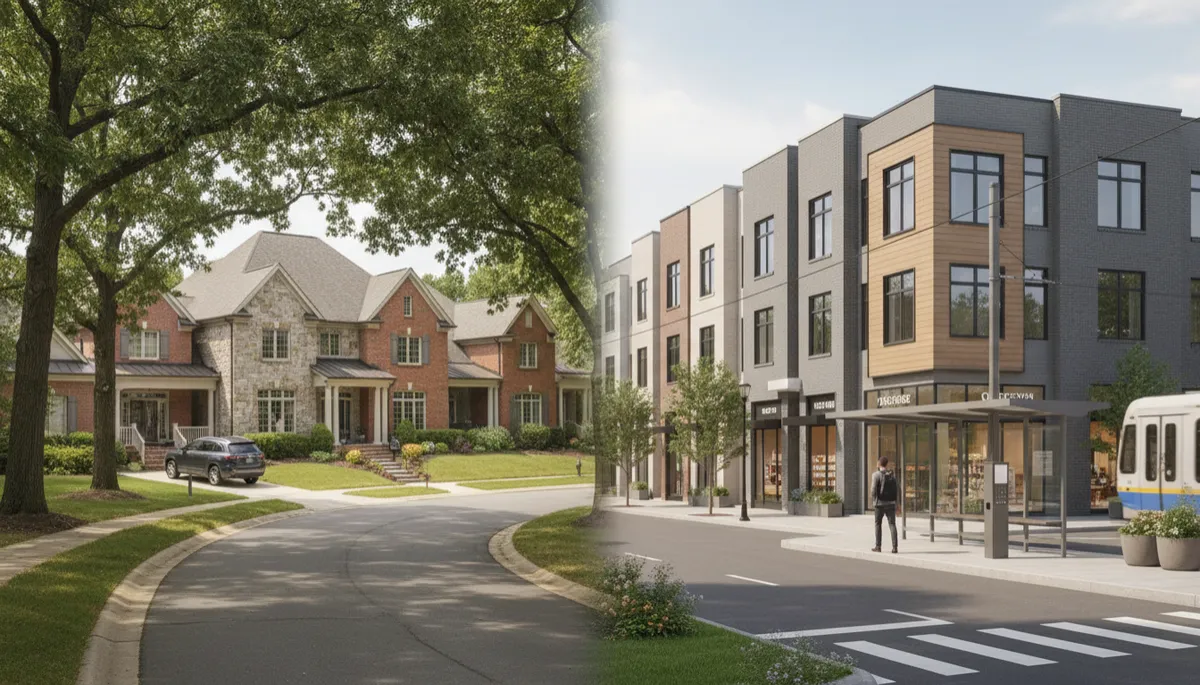
Street-level view showing a quiet tree-lined cul-de-sac of single-family homes in Fort...
Buyers often weigh more space against walkable town centers and transit access.
Commute Considerations: Daily Drive vs. Shorter, Transit-Friendly Routes
For many of our clients at The Mike Webb Team, Commute Comparison is the single biggest deciding factor in choosing between Fort Washington and Northern Virginia. The Washington, D.C. region is known for heavy traffic, and small differences in distance or route can translate into major quality‑of‑life impacts over time.
Commuting from Fort Washington, MD
Fort Washington commuters typically rely on major roadways such as the Capital Beltway (I‑495), Indian Head Highway (MD‑210), and connections into D.C. or Northern Virginia. There is no direct Metrorail station in Fort Washington, so many residents drive to nearby stations or use bus connections. In peak hours, drive times into downtown D.C. or across the river can be significant, particularly when incidents affect the Beltway. For families with flexible or hybrid work schedules, this can be manageable; for daily, peak‑hour commuters, it requires careful planning and patience.
Commuting from Northern Virginia
Northern Virginia, by contrast, offers a broader mix of commuting options. Depending on the specific community, residents may have access to Metrorail (Orange, Silver, Blue, and Yellow Lines), VRE commuter rail, express bus routes, and major corridors such as I‑66, I‑395, and the Dulles Toll Road. Traffic is still intense, but living closer to job centers or along a rail corridor can significantly shorten daily travel times. For professionals who must be in the office most days, this proximity can be worth the higher housing costs.
💡 Pro Tip: Before you commit, test‑drive your potential commute during actual rush hour from both areas. A realistic trial run often clarifies whether more space or a shorter commute matters more to you.
Schools: Evaluating Options on Both Sides of the River
For families, schools are often as important as home prices. Fort Washington is served primarily by Prince George’s County Public Schools, while Northern Virginia includes multiple highly regarded districts such as Fairfax County, Arlington County, Loudoun County, and others. Each system has its own strengths, specialty programs, and school‑by‑school differences.
In Fort Washington, many neighborhoods feed into established schools with strong community ties and access to countywide programs. Families often appreciate the smaller, neighborhood feel and the ability for children to grow up with the same peers from elementary through high school. Some buyers also explore nearby private or parochial schools while taking advantage of Fort Washington’s comparatively lower housing costs to balance tuition expenses.
In Northern Virginia, several districts are consistently recognized for academic performance, advanced coursework, and specialized academies. However, those advantages are typically reflected in home prices and property taxes. We encourage our clients to review independent resources such as state report cards and GreatSchools.org, and, when possible, visit schools in person. Ultimately, the “right” school choice depends on your child’s needs, learning style, and your family’s educational priorities, not just test scores or rankings.
Community Amenities: Parks, Shopping, Dining, and Recreation
Both Fort Washington and Northern Virginia offer robust community amenities, but the flavor of those amenities differs. Understanding how you spend your evenings and weekends is key to choosing the right fit.
Fort Washington: Parks, Water Access, and Local Conveniences
Fort Washington is known for its proximity to Fort Washington Park, the Potomac River, and nearby marinas. Outdoor enthusiasts appreciate access to walking trails, fishing, boating, and scenic overlooks. Daily conveniences (grocery stores, local restaurants, and services) are readily available, and National Harbor is a short drive away for dining, entertainment, and events. The overall pace is calmer, with more emphasis on home‑centered living and outdoor recreation than on dense, urban retail corridors.
Northern Virginia: Town Centers, Retail Hubs, and Cultural Access
In Northern Virginia, many communities are built around lively town centers (think Reston Town Center, Mosaic District, or Shirlington) where you can walk to coffee shops, restaurants, fitness studios, and retail. Larger malls, performing arts venues, and quick access into Washington, D.C. add to the amenity mix. For residents who enjoy frequent dining out, live events, and a more urban energy, this can be a major advantage, even if it means sacrificing yard space or square footage at home.
📌 Key Takeaway: Fort Washington leans toward nature, space, and riverfront recreation. Northern Virginia is the place that emphasizes walkable town centers, dense amenities, and cultural access.
Clarifying Your Priorities: Budget, Commute, and Lifestyle Preferences
Ultimately, the choice between Fort Washington and Northern Virginia is not about which area is “better.” It is about which area aligns best with your priorities. As you compare Fort Washington Homes with options in Northern Virginia Real Estate, consider three core categories: budget, commute, and lifestyle.
Budget: How much are you comfortable spending each month, including mortgage, taxes, insurance, and utilities? Fort Washington typically allows you to maximize space and features within a given budget. Northern Virginia may require trade‑offs on size in exchange for location and convenience.
Commute: How many days per week will you commute, and to where? Is remote or hybrid work an option? A longer commute from Fort Washington might be acceptable if you are only in the office a few days a week. If you must be on‑site daily, living closer in Northern Virginia may protect your time and energy.
Lifestyle Preferences: Do you envision evenings in your backyard, or walking to restaurants and events? Is access to the river and green space more important, or is being close to a busy town center your priority? Your honest answers to these questions will naturally point you toward one side of the river or the other.
💡 Pro Tip: Make two lists, “Must‑Haves” and “Nice‑to‑Haves”, for your next home. Then review them separately for Fort Washington and Northern Virginia. You may find that each area satisfies a different version of your list.
How The Mike Webb Team Helps You Decide with Confidence
Navigating a cross‑river decision can feel overwhelming, especially if you are also selling a current home. Our role at The Mike Webb Team is to provide clear, trustworthy guidance so you can move forward with confidence and less stress. We start by understanding your goals: Are you prioritizing Affordable Housing, minimizing your commute, planning for a growing family, or maximizing resale value down the line?
From there, we help you compare specific neighborhoods, not just broad regions. We look at recent sales data, school options, community amenities, and realistic commute times. If you are selling, we also advise on pricing and presentation strategies to maximize your home’s value, whether it is in Fort Washington, Northern Virginia, or elsewhere in the D.C. metro area. Our goal is not to push you toward one side of the river, but to make sure you have the clarity to choose the home and community that truly fit your life.
Final Thoughts: There Is No One-Size-Fits-All Answer
Comparing Fort Washington, MD, and Northern Virginia is not about finding a universal winner. It is about choosing between two strong options, each with its own advantages. Fort Washington offers more space, a quieter Suburban Lifestyle, and a more approachable price point. Northern Virginia offers proximity to major job centers, extensive transit options, and amenity‑rich, walkable communities, at a higher cost of entry.
The right choice depends on your budget, your commute, and your lifestyle preferences. If you are ready to explore both sides of the river (and want a calm, experienced voice to help you weigh each factor) The Mike Webb Team is here to guide you. Together, we can compare Fort Washington Homes and Northern Virginia Real Estate side by side, so your next move supports not just where you live, but how you want to live.